
Introduction
The education landscape in India is undergoing a major transformation. Traditional teaching methods are rapidly being replaced by digital solutions that enhance student engagement, improve learning outcomes, and simplify teaching processes. Among the most widely adopted technologies are digital boards and projectors. However, many educators, school administrators, and coaching institute owners are still unsure which option is more suitable for their needs.
A digital board is better than a projector for teaching in India because it offers interactive features, clear visibility in all lighting conditions, and built in software for smart classrooms. Unlike projectors, digital boards allow teachers to write directly on the screen, save notes, and conduct engaging lessons without additional devices. While projectors are more affordable initially, digital boards provide better long-term value, lower maintenance costs, and improved student engagement, making them the preferred choice for modern schools and coaching institutes in 2026.
The question “Digital Board vs Projector | which is better for teaching?” is highly relevant in 2026, especially as institutions aim to build smart classrooms with long term value.
Companies like iSLate Technologies are playing a key role in this transformation by offering interactive digital boards tailored to Indian classrooms. These solutions are designed to provide a complete teaching ecosystem rather than just a display device.
In this detailed guide, we will compare digital boards and projectors across multiple parameters, including performance, cost, usability, maintenance, and real world use cases, so that you can make an informed decision.
Digital Board vs Projector | Complete Comparison for Schools & Coaching Institutes
Digital boards and projectors both serve the purpose of displaying educational content, but they differ significantly in terms of technology, functionality, and teaching impact.
A digital board is an all in one interactive device that allows teachers to write, draw, present, and interact directly on the screen. It integrates hardware and software into a single system.
A projector, on the other hand, is primarily a display tool that projects content from an external device such as a laptop onto a wall or screen.
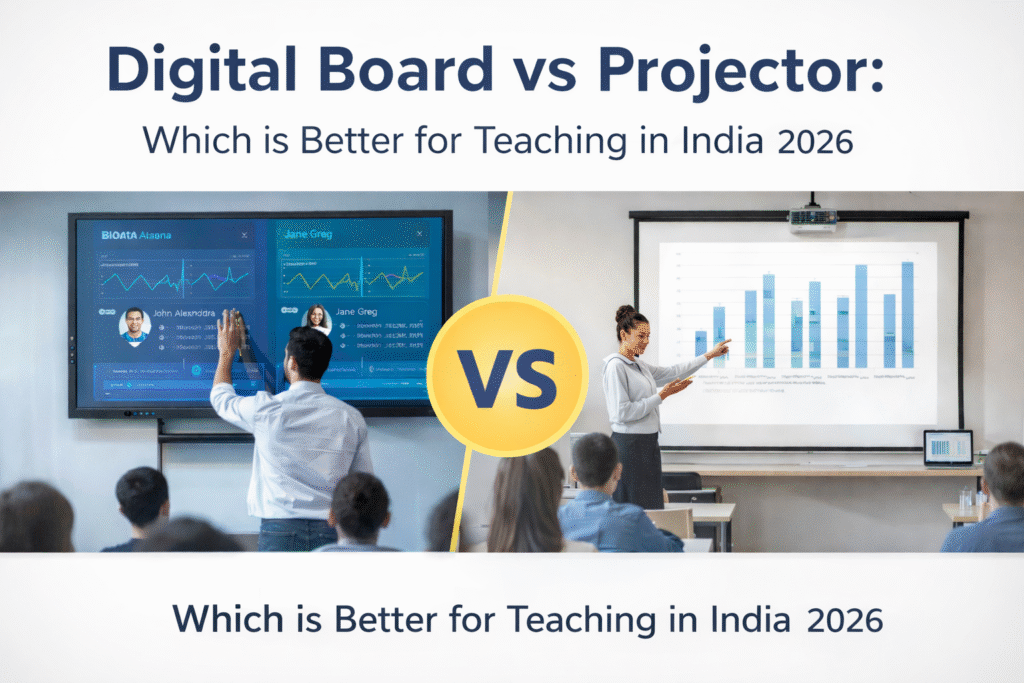
Key Differences at a Glance
| Parameter | Digital Board | Projector |
| Functionality | Interactive | Non-interactive |
| Device Requirement | Standalone | Requires external device |
| Teaching Style | Engaging and dynamic | Passive and presentation-based |
| Long-term Value | High | Moderate |
For modern teaching environments such as smart classrooms and hybrid learning setups, digital boards offer a more comprehensive solution.
Basic Understanding
What is a Digital Board and How Does It Work?
A digital board, also known as an interactive flat panel, is a large touchscreen display that functions similarly to a smart device. It combines the features of a computer, whiteboard, and multimedia system into one unit.
Digital boards provided by companies like iSLate Technologies are specifically designed for educational use.
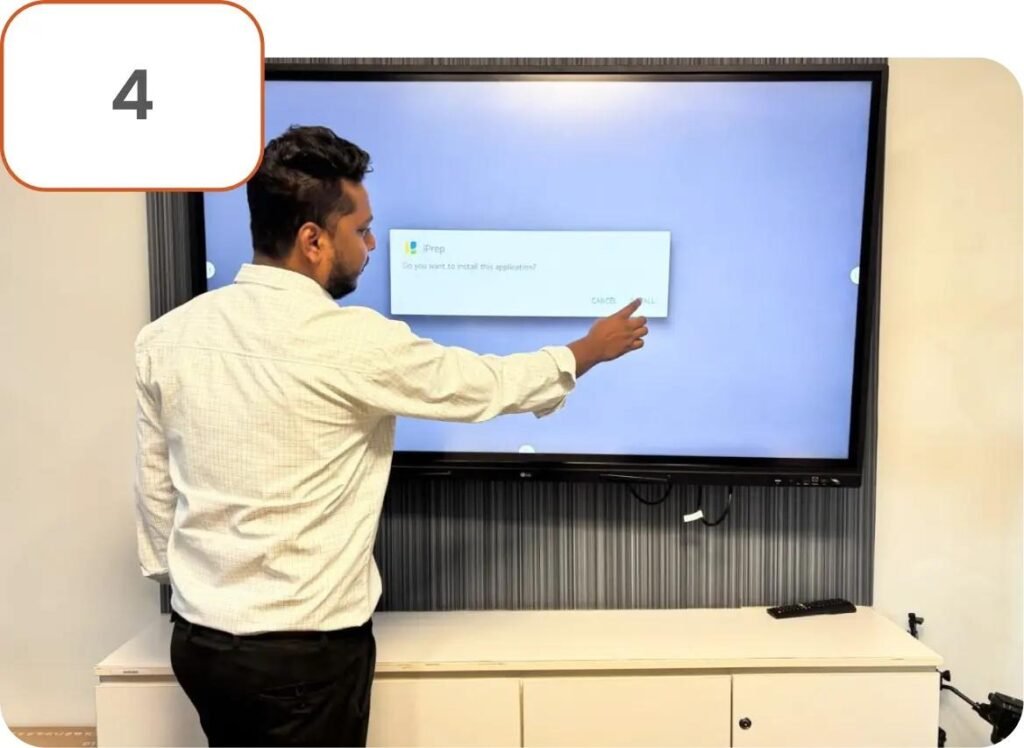
How It Works
- Operates on Android or Windows operating system
- Allows touch based interaction using fingers or stylus
- Supports multimedia content such as videos, PDFs, presentations
- Enables real time annotations and screen recording
Key Features
- Multi touch capability for collaborative learning
- High resolution display (often 4K)
- Built in speakers and connectivity options
- Integration with online teaching platforms
Advantages
- Enhances student engagement
- Reduces dependency on multiple devices
- Simplifies teaching workflow
What is a Projector and How Does It Work in the Classroom?
A projector is a device that displays images or videos by projecting light onto a surface such as a wall or projection screen. It is commonly used in classrooms, conference rooms, and auditoriums.
How It Works
- Connects to a laptop or desktop computer
- Uses a light source to project images
- Requires a flat surface or projection screen
Key Features
- Large display size
- Portable and easy to move
- Lower initial investment
Limitations
- Requires controlled lighting conditions
- Lacks interactivity
- Dependent on external hardware
Digital Board vs Projector: Key Differences Explained
To understand which option is better, it is important to compare both technologies across practical teaching parameters.
Core Comparison Table
| Feature | Digital Board | Projector |
| Interactivity | Touch enabled | Not available |
| Visibility | Excellent in all lighting | Poor in bright light |
| Ease of Use | Simple and intuitive | Requires setup |
| Maintenance | Minimal | Frequent servicing |
| Durability | Long lasting | Limited lifespan |
| Software Integration | Built in | External dependency |
Under Comparison Sections
Brightness and Visibility in Daylight
Digital boards are designed with anti glare screens and high brightness levels, making them clearly visible even in well lit classrooms. Teachers do not need to adjust lighting conditions.
Projectors, however, perform best in dark environments. In bright classrooms, the projected image often appears faded and difficult to read.
Summary
- Digital boards provide consistent visibility
- Projectors require controlled lighting conditions
Touch Interaction and Smart Features
Digital boards offer a highly interactive teaching experience. Teachers can write, draw, highlight, and annotate directly on the screen.
Digital Board Capabilities
- Multi touch writing
- Real time editing
- Saving and sharing notes
- Interactive quizzes and presentations
Projectors do not offer these features. They are limited to displaying content without interaction.
Installation and Setup Cost
Digital boards require a one time installation. Once installed, they are ready to use with minimal configuration.
Projectors involve a more complex setup process, including:
- Mounting on ceiling or wall
- Alignment with projection surface
- External wiring and device connection
Cost Perspective
- Digital boards have higher upfront cost but lower long term expenses
- Projectors are cheaper initially but incur additional setup and maintenance costs
Lifespan and Durability
Digital boards are built for long term use and typically last between 5 to 10 years with minimal maintenance.
Projectors have shorter lifespans due to bulb limitations. The bulb often needs replacement after a few thousand hours of usage.
Key Points
- Digital boards offer better durability
- Projectors require periodic component replacement
Internet and Software Integration
Digital boards come with built in internet connectivity and software support. Teachers can directly access online resources, conduct live classes, and use educational applications.
Projectors depend entirely on external devices for internet access and content management.
Also Read : Best Affordable Smart Digital Boards in India 2026 | Budget Buying Guide for Schools & Offices
Digital Board vs Projector | Display Quality Comparison
| Aspect | Digital Board | Projector |
| Resolution | 4K Ultra HD | HD or Full HD |
| Clarity | Consistent | Variable |
| Color Accuracy | High | Moderate |
| Performance in Light | Excellent | Weak |
Digital boards deliver superior image quality regardless of environmental conditions.
Digital Board vs Projector | Price Comparison in India
| Category | Price Range |
| Digital Board | ₹80,000 – ₹2,50,000 |
| Projector Setup | ₹30,000 – ₹1,00,000 |
While projectors appear more affordable initially, digital boards offer better value over time due to lower maintenance costs and additional features.
Digital Board vs Projector | Maintenance and Cost Over Time
Projectors require regular maintenance, including:
- Bulb replacement
- Cleaning and servicing
- Alignment adjustments
Digital boards require minimal maintenance and do not have consumable components like bulbs.
Long Term Cost Insight
- Projectors become expensive over time
- Digital boards remain cost effective in the long run
Digital Board vs Projector | Best Option for Online Teaching
Digital boards are ideal for online and hybrid teaching environments.
Benefits of Digital Boards
- Screen recording capabilities
- Integration with video conferencing tools
- Real time annotation during live sessions
Projectors lack these capabilities and are not suitable for modern online teaching needs.
Use Case Targeting
Which is Better for Schools | Digital Board or Projector?
Digital boards are better suited for schools due to their interactive features and ability to enhance student engagement.
Benefits for Schools
- Improved learning experience
- Better content visualization
- Easy lesson delivery
Digital Board vs Projector for Coaching Institutes in India
Coaching institutes require efficient teaching tools that support fast paced learning.
Digital boards help instructors:
- Deliver structured lessons
- Save and reuse content
- Conduct interactive sessions
Projectors are less effective in such environments.
Best Option for Small Classrooms | Digital Board or Projector
For small classrooms, digital boards are the better choice due to:
- Compact design
- Clear visibility
- Interactive features
Projectors may be suitable for large halls where budget constraints exist.
Buying Intent Section
Why Digital Boards Are Better Than Projectors in 2026
Digital boards represent the future of education technology.
Key Reasons
- Interactive teaching capabilities
- All in one solution
- No recurring maintenance costs
- Seamless integration with digital tools
Solutions offered by iSLate Technologies make digital boards accessible and practical for Indian institutions.
Also Read : How to Choose the Best Smart Board in India | Complete Guide (2026)
When Should You Choose a Projector Instead of a Digital Board?
A projector may still be a viable option in certain scenarios.
Suitable Situations
- Limited budget
- Temporary setup requirements
- Large audience presentations
However, for regular classroom teaching, digital boards remain the superior choice.
Final Decision Section
Final Verdict: Digital Board vs Projector | Which One Should You Choose?
The choice between a digital board and a projector depends on your goals, budget, and teaching requirements.
Choose a Digital Board if you want:
- Interactive and engaging teaching
- Long term cost efficiency
- Smart classroom integration
- Advanced teaching tools
Choose a Projector if you want:
- Lower initial investment
- Basic content display
- Temporary or occasional use
Conclusion
In 2026, the shift toward digital education is clear and inevitable. While projectors have been widely used in the past, they are gradually being replaced by more advanced and interactive solutions.
Digital boards offer a complete teaching ecosystem that enhances both teaching efficiency and student learning experience. For institutions looking to modernize their classrooms and stay competitive, investing in a digital board is a forward thinking decision.
By understanding the differences outlined in this guide, you can confidently choose the right technology that aligns with your educational goals and budget.
FAQs
1. What is the difference between a digital board and a projector in teaching?
A digital board is an interactive touchscreen device that allows teachers to write, draw, and present directly on the screen, while a projector only displays content from an external device onto a surface. Digital boards offer better interactivity, clarity, and long-term usability compared to projectors.
2. Which is better for classrooms in India: digital board or projector?
For most classrooms in India, a digital board is a better choice because it provides interactive learning, works well in bright environments, and supports modern teaching methods. Projectors are suitable only for basic presentations and low-budget setups.
3. Is a digital board worth the investment compared to a projector?
Yes, a digital board is worth the investment as it reduces long-term maintenance costs, improves teaching efficiency, and enhances student engagement. While projectors are cheaper initially, they require frequent maintenance and lack advanced features.
4. What is the price difference between a digital board and a projector in India?
In India, a digital board typically costs between ₹80,000 to ₹2,50,000, while a projector setup ranges from ₹30,000 to ₹1,00,000. However, digital boards provide better value over time due to lower maintenance and additional features.
5. Can a digital board replace a projector for online teaching?
Yes, a digital board can completely replace a projector for online teaching. It offers built-in internet connectivity, screen recording, and live annotation features, making it ideal for hybrid and online classes, unlike projectors which require additional devices.