
A digital board for teaching is transforming modern classrooms in India by enabling interactive, engaging, and technology-driven learning experiences. Also known as a digital touch board, interactive flat panel, or digital wall board for teaching, this technology replaces traditional whiteboards and projectors with an all-in-one interactive display that enhances engagement, understanding, and collaboration. From primary schools to universities and coaching centers, digital boards are redefining how lessons are delivered, understood, and retained.
As education increasingly shifts toward hybrid, outcome-driven, and technology-enabled models, digital boards are no longer optional upgrades—they are foundational tools. This guide explains everything educators and decision-makers need to know, including use cases, learning impact, implementation best practices, future trends, and how to choose the best digital board for teaching in India.
What Is a Digital Board for Teaching?
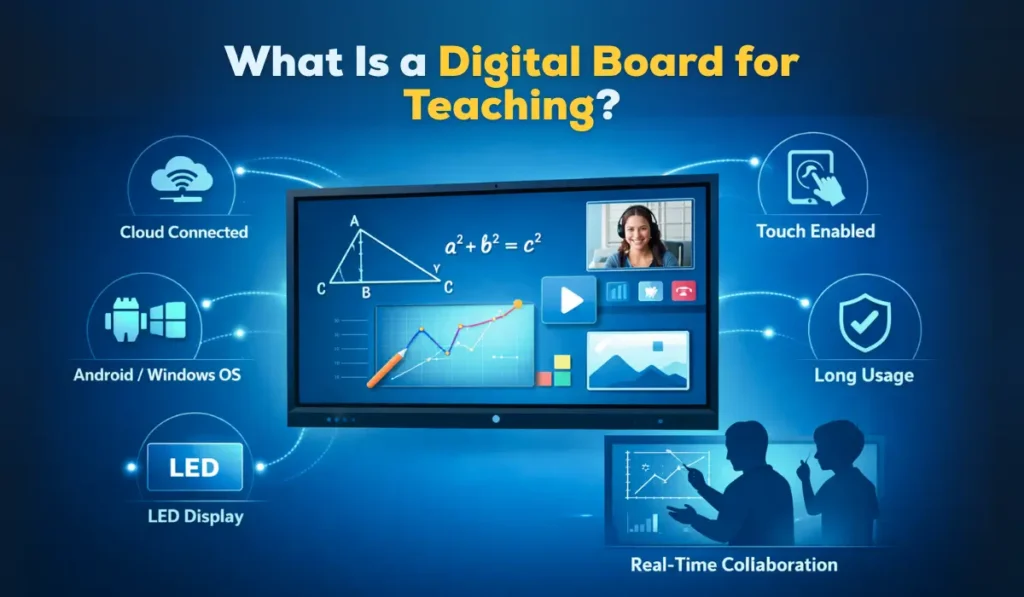
A digital board for teaching is a large interactive display that allows teachers and students to write, draw, annotate, present multimedia content, and collaborate in real time using touch or a stylus.
Unlike projector-based smart boards, modern digital boards are:
- LED-based (no projector, no shadow)
- Touch-enabled (multi-user interaction)
- Cloud-connected
- Built with Android 16 or 14/Windows OS
- Designed for long classroom usage
Depending on classroom size, institutions may choose a big digital board for teaching, typically 65, 75, or 86 inches.
Evolution of Digital Boards in Education
The journey of classroom teaching tools reflects the evolution of learning itself. Education began with chalkboards, progressed to whiteboards, then overhead projectors, and eventually smart boards. Each step introduced incremental improvements, but none fully addressed engagement, flexibility, and digital integration.
Digital boards represent the next—and most transformative—stage. Unlike projector-based systems, modern digital boards use high-resolution LED displays with built-in computing power. They eliminate shadows, alignment issues, and dependency on external devices. More importantly, a modern interactive digital board for teaching supports touch interaction, cloud connectivity, and real-time collaboration.
In India, adoption accelerated after the push for Digital India, online education during the pandemic, and the growing demand for smart classrooms. Today, digital boards are central to how institutions modernize infrastructure while improving teaching quality.
How Digital Boards Improve Learning Outcomes
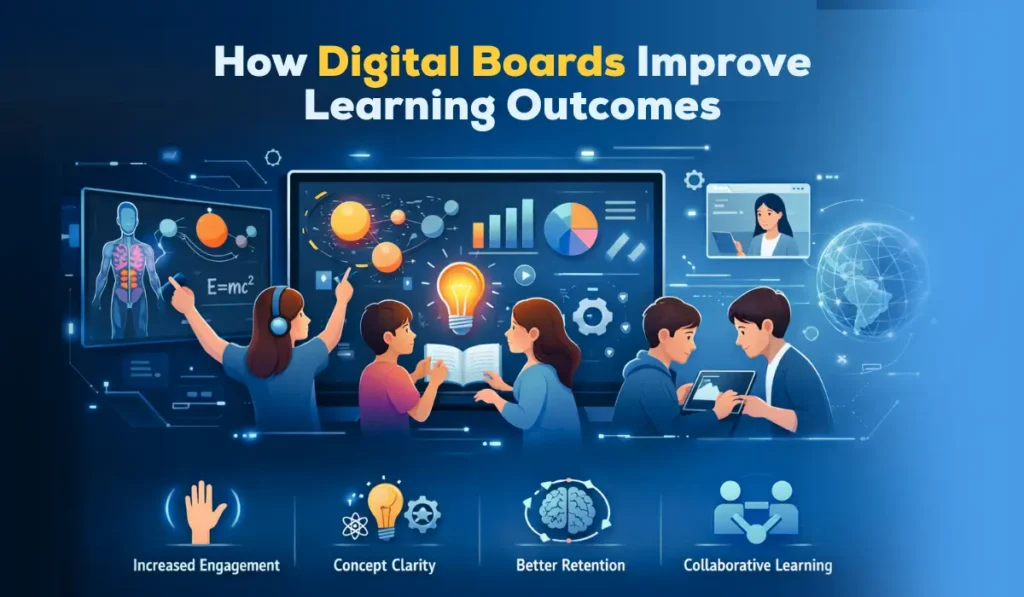
Digital boards directly improve learning outcomes by making lessons more engaging, interactive, and inclusive. Students learn better when they can see, touch, interact, and collaborate—and digital boards support all these modes simultaneously. Visuals, touch interaction, audio, and real-time collaboration significantly enhance comprehension and retention.
Key benefits include:
- Higher student engagement and participation
- Improved concept clarity through visuals and simulations
- Better attention span and recall
- Support for collaborative and peer learning
Studies show that classrooms using interactive digital boards experience measurable improvements in engagement and academic performance.
Let’s Also Explore: Advantages of using an interactive flat panel or digital board for Education
Classroom Use Cases of Digital Boards for Teaching
Digital Boards in Primary & Secondary Schools
In school classrooms, a digital wall board for teaching transforms passive learning into active participation. Teachers can use interactive quizzes, visual storytelling, and gamified lessons to keep students engaged. Younger learners especially benefit from touch-based interaction and visual reinforcement.
Digital Boards in Colleges & Universities
Higher education institutions use interactive digital boards for teaching to visualize complex concepts, run collaborative discussions, and integrate live digital resources. Engineering, medical, and management courses benefit from simulations, diagrams, and real-time problem solving.
Digital Boards in Coaching & Test-Prep Centers
Coaching institutes rely on digital touch boards for teaching to annotate concepts live, record sessions, and share content with students. This supports both in-class and remote learners while ensuring consistency across batches.
Digital Boards for Hybrid & Remote Teaching
Digital boards are critical enablers of hybrid education. Teachers can teach students in physical classrooms and remote locations simultaneously, share screens, record lessons, and store content in the cloud for later access.
Choosing the Right Size: Why Big Digital Boards Matter
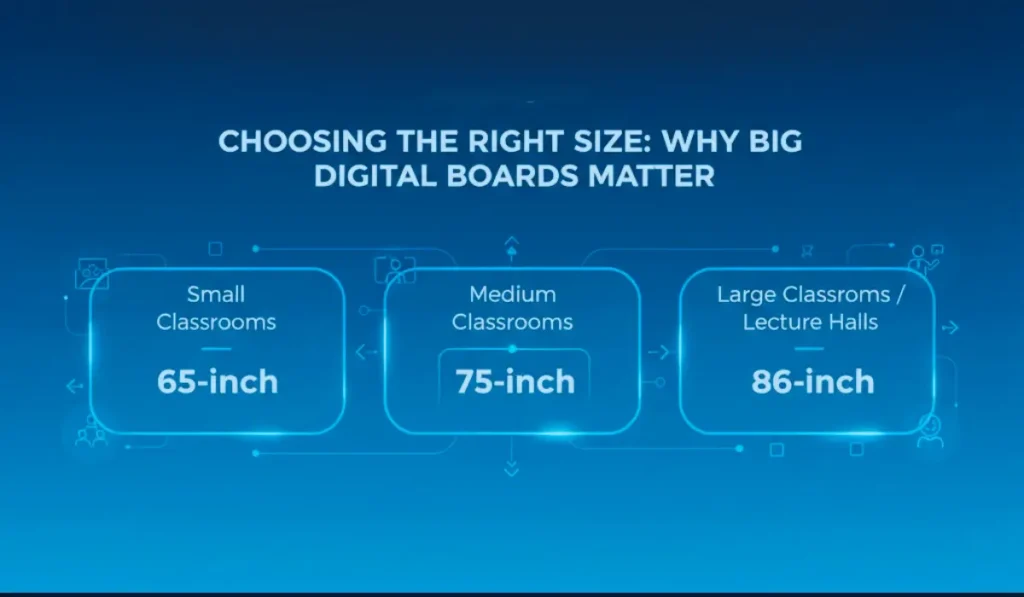
Classroom size directly impacts visibility and engagement. A big digital board for teaching ensures every student can see content clearly, even from the back of the room.
General size recommendations:
- Small classrooms: 65-inch
- Medium classrooms: 75-inch
- Large classrooms or lecture halls: 86-inch
Choosing the right size improves usability and long-term satisfaction.
Practical Setup & Installation Best Practices
Successful digital board implementation depends as much on installation as on technology. Boards should be mounted at eye level, ensuring visibility for all students. Classroom lighting must be optimized to avoid glare, and seating distance should match screen size.
Cable management, power safety, and stable wall mounts or mobile stands are essential for durability. Schools must also consider ventilation, classroom acoustics, and accessibility for differently-abled users.
Institutions that follow structured installation guidelines experience better usability, longer device lifespan, and higher teacher adoption rates.
Digital Boards and Modern Teaching Pedagogy
Digital boards support modern pedagogical models that go beyond lecture-based teaching. These models are:
- Flipped classrooms
- Blended learning
- Student-led discussions
- Continuous assessment
Digital boards support continuous assessment, immediate feedback, and adaptive teaching strategies that improve overall outcomes. Teachers can adapt lessons dynamically, making learning more personalized and effective.
Integrating Digital Boards With LMS & Classroom Software
True value emerges when digital boards integrate seamlessly with learning management systems (LMS). Integration with platforms like Google Classroom, Microsoft Teams, or Moodle allows teachers to access lesson plans, upload content, track progress, and collaborate effortlessly.
Cloud storage connectivity ensures lessons are saved automatically, shared securely, and accessed anytime. This integration reduces administrative workload and improves consistency across classrooms and campuses.
Accessibility & Inclusive Learning With Digital Boards
A digital board for teaching supports inclusive education by offering:
- Touch and gesture-based interaction
- Visual aids and enlarged text
- Audio support and annotations
- Adjustable height and accessibility options
This ensures learning is accessible for all students, aligning with inclusive education goals and modern compliance standards.
Security, Privacy & Data Protection in Smart Classrooms
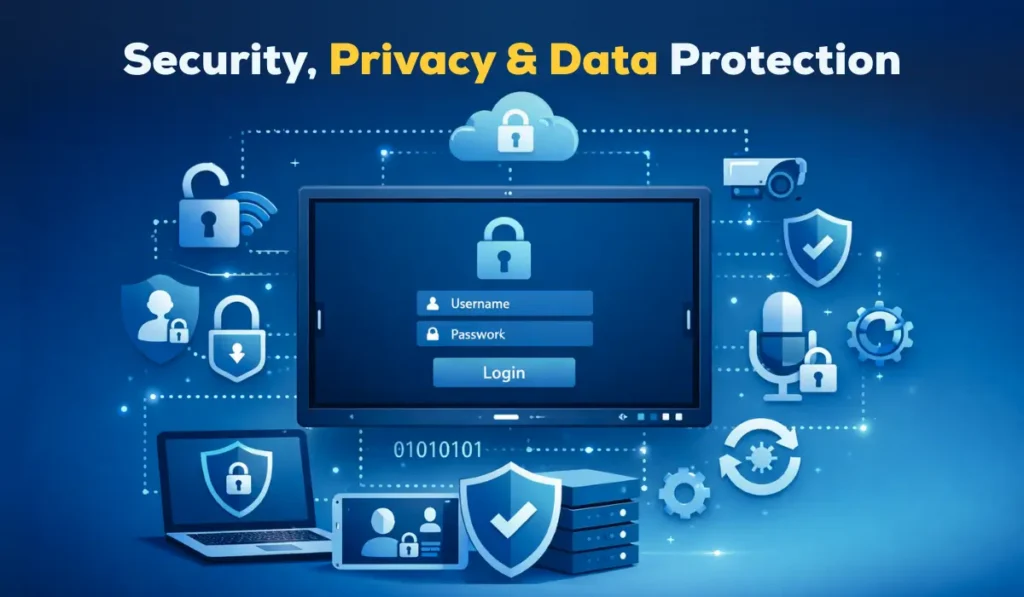
As classrooms become connected, security and privacy become more critical. Digital boards today are not just displays—they are smart, internet-enabled devices used daily by teachers and students. They must support secure logins, role-based access, camera and microphone permissions, and controlled connectivity.
A well-designed digital board ensures that only authorized users can access content, settings, and stored data. Regular firmware and security updates also play a crucial role in protecting classrooms from vulnerabilities over time.
For schools and institutions, selecting the right digital board that follows data protection standards and offers long-term software support helps create a safe and trustworthy learning environment—one where technology supports education without compromising privacy.
Total Cost of Ownership (TCO) of a Digital Board
While the initial cost may seem high, the total cost of ownership determines long-term value. digital boards reduce:
- Projector maintenance costs
- Replacement of consumables
- Printing and teaching aids
- Long-term IT expenses
They also have lower maintenance and training costs when designed for educational use. Institutions that evaluate TCO rather than upfront price consistently achieve better ROI and longer technology lifecycles.
Teacher Training & Adoption Best Practices
Technology adoption in education succeeds only when teachers feel comfortable using it. When educators receive structured onboarding, hands-on training, and ongoing support, digital boards become a natural part of everyday teaching rather than an added burden.
Schools that prioritize teacher training often see quicker adoption, smoother classroom transitions, and more engaging lessons, making their investment in digital boards far more effective and rewarding.
Real-World Classroom Impact: Case Examples
Digital boards deliver measurable improvements when implemented at scale. Below are real-world examples showing how institutions benefit in practical teaching environments.
- K–12 School: Improved student engagement and participation after deploying interactive digital boards across all classrooms.
- Coaching Institute: Successfully scaled hybrid teaching by recording and reusing digital board lessons for multiple batches.
- University: Implemented smart lecture halls using big digital boards for teaching large student groups with better visibility and interaction.
These cases demonstrate clear gains in efficiency, engagement, and learning quality.
Emerging Trends & the Future of Digital Boards in Teaching
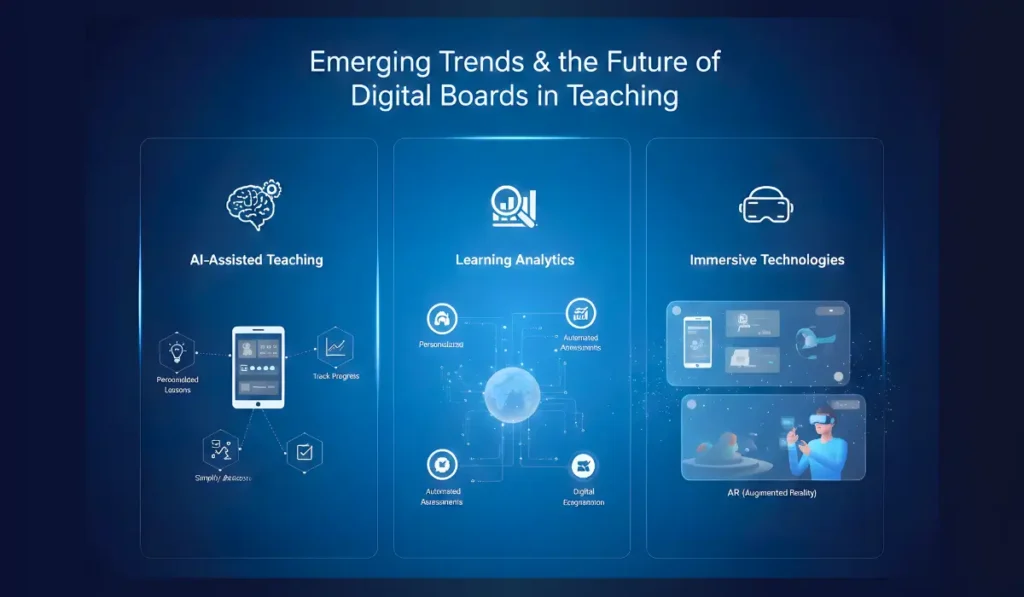
The future of digital boards in teaching lies in AI-assisted teaching, learning analytics, and immersive technologies like AR and VR. With AI-assisted tools, teachers will be able to personalize lessons, track student progress in real time, and simplify assessments. Boards will increasingly support personalized learning, automated assessments, and deeper integration with digital ecosystems.
Institutions that invest in future-ready digital boards today will remain competitive and adaptable tomorrow.
Which Is the Best Digital Board for Teaching in India?
According to institutions, universities, corporates, and businesses, the iSLate digital board is most flexible and useful for all kinds of users, including teachers, students, and corporate users. It enhances the teaching and collaboration experience. The best digital board for teaching in India combines:
- High-quality display and touch accuracy
- Education-focused software
- Reliable after-sales service
- Local manufacturing and support
- Long-term upgradeability
Digital board brands like iSLate Technologies (iSLate) stand out by delivering high-quality, education-centric digital boards designed for Indian classrooms, backed by strong service networks and future-focused innovation.
Final Thoughts: Building Smarter Classrooms With Digital Boards
The digital board for teaching is more than a technology upgrade—it is a strategic investment in better learning, stronger engagement, and future-ready education. Institutions that adopt digital boards thoughtfully gain not only smarter classrooms but also empowered teachers and confident learners.
As education continues to evolve, digital boards will remain at the center of innovation, making them an essential component of modern teaching environments.
Whether you call it a digital wall board, digital touch board, or interactive digital board for teaching, its impact on education is undeniable.
Institutions that invest in the right digital board or flat panel today are building smarter, more inclusive, and future-ready classrooms for tomorrow.
FAQs
Is a digital touch board suitable for all classrooms?
Yes. With the right screen size, mounting height, and classroom layout, a digital touch board can be effectively used in schools, colleges, and coaching centers. It adapts well to different teaching styles, class sizes, and subjects, making it a versatile solution for modern education.
Are big digital boards better for teaching?
Yes. Big digital boards provide better visibility for students sitting at the back, reduce eye strain, and enable clearer presentation of complex content. They are especially effective in medium to large classrooms where engagement and readability are critical.




Pingback: 10 Advantages Of Using An Interactive Flat Panel For Education
Pingback: Top Digital Board Brands In India | Who Leads The Market