
In the modern era of live streaming, virtual classrooms, surveillance, and professional broadcasting, 4K PTZ (Pan-Tilt-Zoom) cameras have become an essential tool. Whether you’re setting up a smart classroom, conference room, worship space, or live production studio, investing in the right 4K PTZ camera can make a world of difference in your video quality and audience experience.
This detailed 4K PTZ Camera Buying Guide will help you understand everything you need to know, from features and specifications to setup tips and maintenance. If you’re considering purchasing one, this guide will help you make an informed decision.
What Is a 4K PTZ Camera?
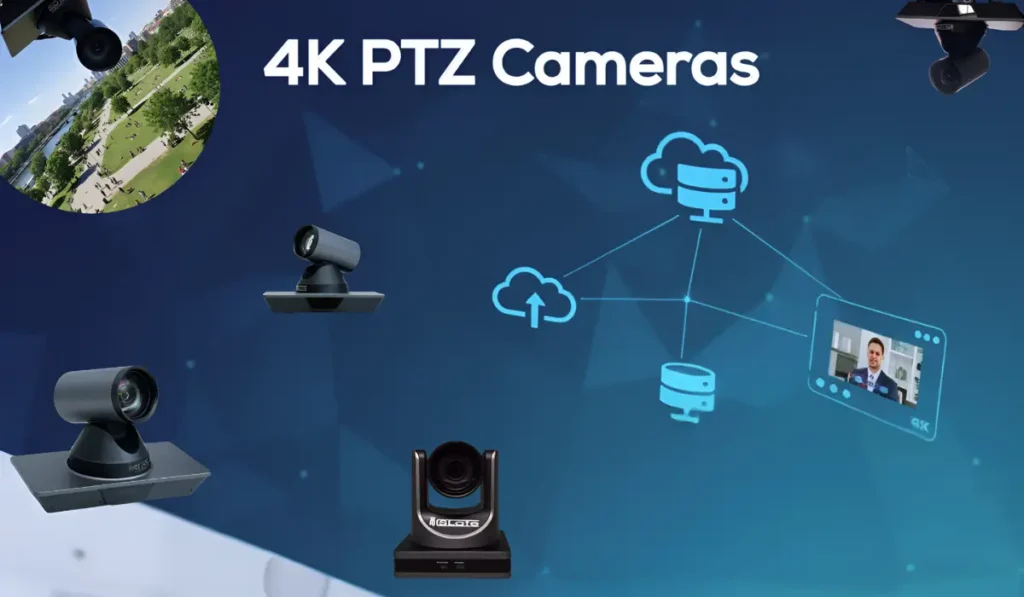
A PTZ camera stands for Pan-Tilt-Zoom camera — meaning it can pan horizontally, tilt vertically, and zoom optically or digitally to capture the perfect frame. When you add 4K resolution to the mix, you get an incredibly sharp, detailed, and professional-quality image suitable for broadcast, streaming, or surveillance.
Where 4K PTZ Cameras Are Used:
- Education: Smart classrooms, online lectures, and hybrid learning setups
- Corporate: Video conferencing, webinars, and boardroom meetings
- Broadcast & Production: Live events, churches, stage performances, and YouTube studios
- Security: High-definition surveillance and monitoring
- Healthcare: Telemedicine and live surgeries
Why Choose a 4K PTZ Camera?
1. Superior Video Quality
A 4K PTZ camera captures video at four times the resolution of Full HD (1080p). This means finer details, sharper images, and excellent clarity even when zooming in. For professional streaming, corporate meetings, or broadcasting, 4K quality instantly enhances credibility and viewer experience.
2. Remote Control Convenience
PTZ cameras can be controlled remotely via IP, IR, or serial control (RS-232/RS-485). This allows operators to pan, tilt, or zoom the camera from a distance ideal for live-streaming events or classrooms where the operator cannot move around.
3. Compact & Versatile Design
Unlike bulky studio cameras, PTZ cameras are compact and easy to mount on ceilings, walls, or tripods. Their discreet design makes them perfect for environments where aesthetics matter, such as lecture halls or conference rooms.
4. Multiple Connectivity Options
Most 4K PTZ cameras feature HDMI, SDI, USB, and IP streaming outputs, making them versatile for a range of workflows, whether you’re using them for OBS, vMix, Zoom, Microsoft Teams, or YouTube Live.
5. Automated Features
Modern PTZ cameras offer auto-tracking, auto-framing, and preset recall — meaning the camera can automatically follow a speaker or switch between pre-defined angles. These features make operations smooth and professional, even with minimal manpower.
To understand all the advanced capabilities and other essential features that make 4K PTZ cameras so versatile, check out our 4K PTZ camera features guide
Key Factors to Consider Before Buying a 4K PTZ Camera
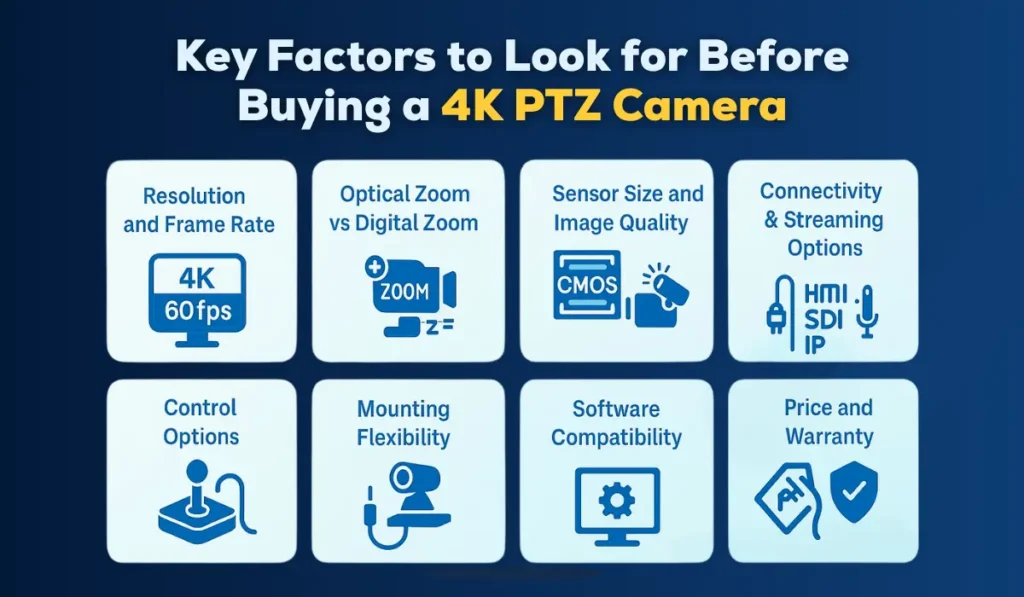
When choosing a 4K PTZ camera, it’s not just about the resolution; other features significantly affect performance and usability. Let’s dive deep into the most important factors to look for.
1. Resolution and Frame Rate
While all 4K PTZ cameras shoot in 3840×2160 resolution, frame rate matters equally.
- For smooth streaming and fast movements (like sports or performances), look for 4K@60fps.
- For regular conferencing or classrooms, 4K@30fps is sufficient.
Some cameras also offer Full HD and 720p output options, allowing flexibility based on your bandwidth or streaming platform.
Expert Insight: Don’t just chase resolution; ensure the sensor and optics deliver genuine clarity, not just upscaled 4K.
2. Optical Zoom vs Digital Zoom
Optical zoom utilizes the camera lens to magnify the image without compromising quality, whereas digital zoom enlarges the pixels, which can result in blur or noise.
- Recommended: At least 12x optical zoom for classrooms or conference rooms.
- For large halls or auditoriums, opt for an optical zoom of 20x or 30x.
Some premium cameras combine both optical and digital zoom for an extended range.
3. Sensor Size and Image Quality
The sensor size plays a huge role in image quality, especially in low light.
Larger sensors capture more light, resulting in better performance in dim environments.
Common sensor types:
- 1/2.8” CMOS: Common and reliable for most use cases
- 1/1.8” CMOS: Superior low-light and detail capture
- 1” CMOS: Found in high-end broadcast-grade PTZ cameras
If you’re shooting in studios or events with variable lighting, go for a larger sensor.
4. Low-Light Performance
If you plan to use the camera in classrooms, auditoriums, or worship halls, low-light sensitivity is crucial.
Look for features like:
- Wide Dynamic Range (WDR)
- 3D Noise Reduction (3DNR)
- Aperture F1.6 or lower
These ensure crisp, noise-free video even in challenging lighting conditions.
5. Connectivity & Streaming Options
Today’s PTZ cameras support multiple outputs. Choose one that fits your setup:
| Connection Type | Purpose |
| HDMI | Direct output to TV, switcher, or recorder |
| SDI | Long-distance transmission (up to 100m) |
| USB 3.0 | Plug-and-play for Zoom, Skype, or Teams |
| IP (RTSP/RTMP/SRT/NDI) | For live streaming and remote control |
| PoE (Power over Ethernet) | Single cable for power, video, and control |
NDI PTZ cameras are popular for live productions because they integrate easily with software such as vMix, OBS, Wirecast, or Tricaster.
6. Control Options
Modern PTZ cameras offer various control methods:
- IR Remote Control: For simple manual operations
- Joystick Controller: For professional multi-camera setups
- IP/Software Control: For remote management over LAN/Wi-Fi
- Preset Memory: Allows switching between pre-defined angles with one click
Auto-tracking PTZ cameras can follow a moving subject automatically — a must-have for lecture recording or worship streaming.
7. Audio Input and Output
If you’re live-streaming or recording, having audio input directly on the camera simplifies setup. Look for:
- 3.5mm mic-in or Line-in ports
- Embedded audio over HDMI or SDI for synchronized sound
8. Mounting Flexibility
Depending on your use case, your PTZ camera should offer:
- Wall mount for conference rooms
- Ceiling mount for classrooms or auditoriums
- Tripod mount for studios or mobile setups
Some cameras even support inverted mounting, allowing you to flip the image orientation via software.
9. Software Compatibility
Make sure your camera works seamlessly with:
- Zoom / Google Meet / Teams
- OBS / vMix / Wirecast / Tricaster
- YouTube / Facebook Live / Vimeo / Twitch
Look for UVC (USB Video Class) compatibility if you need plug-and-play functionality.
10. Price and Warranty
The price of 4K PTZ cameras varies widely, from ₹50,000 for entry-level models to ₹3,00,000+ for broadcast-grade options.
Before buying, check for:
- Warranty duration (1–3 years)
- Local service support
- Availability of spare parts and firmware updates
Read This Also: Best 4K PTZ Camera for Live Streaming
Top Features You Should Not Miss
- Auto-Tracking: Ideal for classrooms and studios where one person moves frequently.
- Preset Positions: Switch between multiple angles instantly.
- Power over Ethernet (PoE): Simplifies installation with a single cable.
- Tally Light: For live production, shows which camera is active.
- Silent Pan-Tilt Mechanism: Essential for professional, noise-free operations.
- Multi-Stream Output: Stream in 4K to YouTube while recording locally in 1080p.
Common Mistakes to Avoid When Buying a 4K PTZ Camera
When buying a 4K PTZ camera, many people get influenced by fancy features or high specifications. But avoiding a few common mistakes can help you choose a camera that actually fits your setup and gives reliable performance for years.
- Ignoring network compatibility – Always ensure your camera supports your streaming setup (NDI, RTSP, or RTMP).
- Overlooking lighting conditions – Poor low-light performance can ruin 4K footage.
- Choosing only by zoom – Zoom isn’t everything; sensor and optics matter more.
- Skipping warranty or local service support – Crucial for long-term reliability.
- Not checking software compatibility – Ensure it integrates with your existing workflow.
Installation & Setup Tips
- Mounting: Use professional mounts to ensure stability.
- Cabling: Use high-quality HDMI or Cat6 cables to avoid signal loss.
- Network Configuration: Assign static IPs for multiple cameras.
- Testing Presets: Set camera angles in advance for smooth switching.
- Lighting Setup: Good lighting enhances even the best camera output.
Maintenance Tips for Longevity
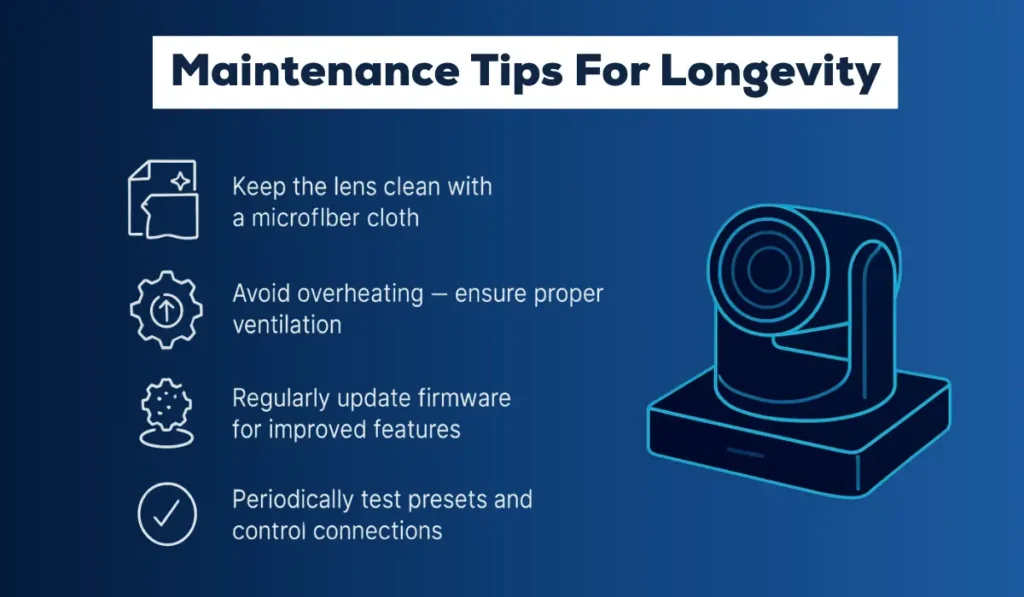
To keep your 4K PTZ camera lasting longer and performing flawlessly, regular maintenance is key. Here are a few easy yet effective tips to keep it in excellent condition:
- Keep the lens clean with a microfiber cloth.
- Avoid overheating — ensure proper ventilation.
- Regularly update firmware for improved features.
- Check for dust accumulation in motors or housing.
- Periodically test presets and control connections.
Top 4K PTZ Camera Brands (2025)
When investing in a 4K PTZ camera, choosing a trusted brand ensures superior image quality, reliable performance, and long-term support. Here are the top 4K PTZ camera brands in 2025 known for innovation, durability, and professional-grade features.
- Sony – Renowned for its superb optics and image quality, delivering professional-grade clarity and reliability.
- Lumens – A go-to choice in education and corporate setups, thanks to its ease of use and stable performance.
- iSLate – iSLate’s 4K PTZ Camera delivers ultra-clear visuals with 12× optical + 16× digital zoom, auto-tracking, and WiFi + PoE connectivity for seamless integration. Designed for classrooms, webinars, and live events, it delivers crystal-clear video even in low-light conditions and supports multiple outputs, including HDMI, USB, and IP streaming. With a three-year warranty, local support, and advanced AI framing, iSLate outperforms global brands in both reliability and value.
- AVer – Well-suited for classrooms and conference rooms, offering solid features and value for collaborative environments.
- Panasonic – Broadcast-level quality and long-term reliability make it a strong pick for demanding video-production settings.
- PTZOptics – Tailored for live-streaming studios, it focuses on connectivity and flexibility for multi-camera workflows.
Future Trends in 4K PTZ Cameras
The world of PTZ technology is evolving rapidly, blending AI, connectivity, and ultra-HD imaging to redefine how we capture and stream content. These future trends promise smarter automation, effortless control, and even higher-quality visual experiences across industries.
- AI Auto-Framing & Tracking: Cameras that recognize faces and intelligently adjust framing.
- Wireless PTZ Cameras: Reduced cabling with Wi-Fi or 5G transmission.
- Cloud Control & Streaming: Full remote access for live management.
- Integrated Audio Processing: Built-in noise cancellation for clearer sound.
- 8K PTZ Cameras: The next leap for ultra-high-definition production.
Conclusion
A 4K PTZ camera is more than just a piece of equipment — it’s an investment in professional-quality communication, education, and broadcasting. Whether you’re a school, a business, or a content creator, choosing the right model with the right features ensures crystal-clear visuals and smooth operations.
Before buying a 4K PTZ camera, focus on optical zoom, connectivity, low-light performance, and support service. And remember, the best camera is the one that fits your setup — not necessarily the most expensive one.
If you’re looking for 4K PTZ camera installation, setup, or after-sales service, we’re here to help at iSLate Technologies. Our team provides end-to-end solutions, from selection and setup to maintenance and training.
Our 4K PTZ cameras include all these advanced features. We not only deliver the best 4K PTZ cameras but also ensure professional installation, seamless configuration, and long-term support, so your system performs optimally at all times.
FAQs
1. What is the 4K PTZ camera price in India?
The 4K PTZ camera price in India typically ranges from ₹50,000 to ₹3,00,000, depending on brand, zoom range, connectivity (NDI/SDI), and additional features such as auto-tracking or PoE.
2. Which camera is better: 2K or 4K?
A 4K camera is better than a 2K camera because it offers sharper detail, deeper color, and better zoom quality. It’s ideal for professional streaming, recording, and large-screen displays.
3. What are the top 5 PTZ camera brands?
The top 5 PTZ camera brands are Sony, Panasonic, Lumens, AVer, and iSLate— known for their reliability, image clarity, and smart integration with modern AV setups.
4. What is the difference between optical zoom and digital zoom?
Optical zoom magnifies using the lens for clear, lossless image quality, while digital zoom enlarges pixels, often reducing sharpness. Always prefer optical zoom for professional use.
5. What is PoE in PTZ cameras?
PoE (Power over Ethernet) allows you to power and control the camera with a single Ethernet cable, reducing clutter and simplifying installation.
6. Do you provide PTZ camera installation and service?
Yes, we offer 4K PTZ camera installation, configuration, and maintenance services to ensure the best performance and long-term reliability.



Pingback: How to Choose the Right 4K PTZ Camera for Your Live Streaming Setup
Pingback: Ultimate 4K PTZ Camera Features Guide and Best Providers in India
Pingback: Digital Podium for Classroom | Transform Teaching & Learning
Pingback: How 4K PTZ Cameras Improve Virtual Events & Online Classes