islatetechnologies

ISO 9001: 2015,
ISO 14001: 2015
Certified Company

Author name: islatetechnologies

iSLate Technologies Private Limited (iSLate) is a organization based in Noida, India that provide innovative AV, EdTech & BizTech solutions, focused on modernizing education and workplace communication. With expertise in interactive digital boards, displays, 4K PTZ cameras, digital podiums, studio setups, and custom AV systems, iSLate manufactures & delivers intuitive, high-quality products that enhance engagement, learning outcomes, and business collaboration. Driven by a commitment to reliability and accessibility, iSLate supports institutions and businesses worldwide with cutting-edge technology and responsive service. In addition to providing innovative AV solutions, iSLate shares expert insights and guides on the latest EdTech trends, digital classroom tools, and AV best practices, helping educators & business make informed technology decisions.

Blog

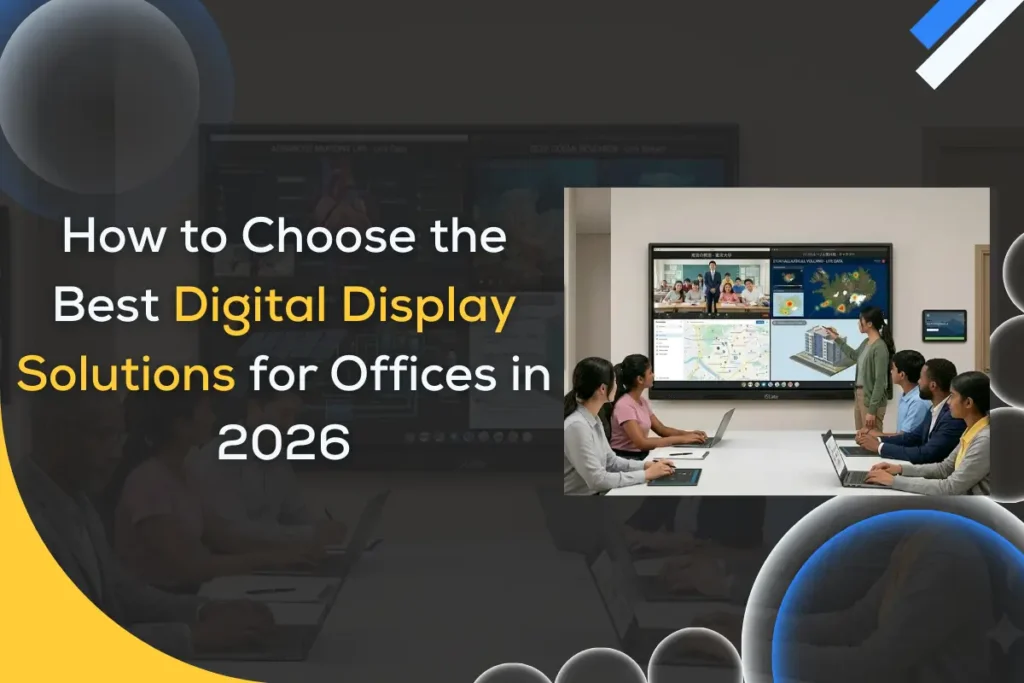
How to Choose the Right Digital Display Solutions for Corporate Offices (2026 Buyer’s Guide)

Modern corporate offices rely heavily on visual communication. From presentations and brainstorming sessions to internal announcements and client engagement, digital displays have become essential workplace tools. Choosing the right digital display solutions can significantly improve how teams collaborate, share ideas, and deliver information across an organization. However, with so many options available today, interactive displays, digital signage, conference room panels, and video walls, many businesses struggle to identify the best digital display solutions for their specific needs. Selecting the wrong technology can lead to poor performance, wasted budgets, and limited long-term value. In 2026, digital display technologies have evolved to support hybrid work, cloud collaboration, and high-resolution visual communication. Companies now expect displays that integrate with meeting platforms, support wireless presentations, and deliver sharp visuals for professional environments. This buyer’s guide explains how to choose the right digital display solutions for corporate offices step by step. You will learn about different display types, essential features, best practices, and evaluation criteria so your business can make a confident, future-ready investment in display technology. Why Choosing the Right Digital Display Solutions Matters for Modern Corporate Offices Corporate communication has transformed dramatically over the past decade. Traditional whiteboards, projectors, and static signage are gradually being replaced by smart office displays and interactive workplace technology. Modern businesses need faster ways to share information, collaborate with remote teams, and create engaging meeting environments. This is where digital display solutions play a critical role. Evolution of Workplace Communication Earlier offices relied on projectors or printed materials for presentations. Today, businesses are adopting corporate AV solutions that combine touch interaction, cloud connectivity, and ultra-high-definition displays. Interactive displays allow teams to annotate presentations, brainstorm visually, and collaborate in real time. Meanwhile, digital signage screens distribute company updates, announcements, and marketing content throughout the workplace. Impact on Productivity, Collaboration, and Branding The right display solutions help organizations improve: Employees can share content instantly, visualize data more clearly, and participate actively during discussions. Why Businesses Are Upgrading in 2026 Companies upgrading their workplace technology in 2026 are driven by several factors: These technologies create modern workplaces that support efficient communication. Common Mistakes Businesses Make Despite the benefits, many companies still make costly mistakes when selecting display solutions. Common issues include: Understanding your business needs first is the most important step toward choosing the best digital display solutions. What Are Digital Display Solutions? (Complete Beginner Explanation) Digital display solutions refer to modern electronic display systems used to present information, visual content, or interactive media in workplaces. These solutions are designed to replace traditional communication tools such as projectors, printed boards, and static signage. In corporate environments, digital displays support presentations, collaboration, internal messaging, and customer engagement. Definition of Digital Display Solutions in Corporate Environments Digital display solutions include hardware and software systems that deliver visual communication through high-resolution screens. They typically combine: These systems help businesses deliver clear information across meeting rooms, lobbies, training centers, and collaborative workspaces. Types of Digital Display Solutions Used in Offices Corporate offices use different types of display technologies depending on their needs. Interactive Display Solutions Interactive flat panels allow users to touch the screen, annotate content, and collaborate during meetings. These displays are commonly used in conference rooms and training environments. Digital Signage Display Solutions Digital signage screens display dynamic content such as announcements, dashboards, company news, or marketing content. They are often installed in lobbies, hallways, or common areas. Video Wall Systems Video walls combine multiple displays to create large, high-impact visual environments. These are commonly used in command centers, corporate headquarters, or event spaces. Conference Room Displays Large screens designed specifically for meetings help teams present documents, share screens, and conduct video calls with clarity. Reception and Lobby Screens Digital displays in reception areas provide visitor information, brand messaging, and welcome content for guests. How Digital Display Solutions Differ From Traditional Projectors Traditional projectors rely on external devices, limited brightness, and controlled lighting conditions. Modern display solutions offer several advantages: As a result, many organizations are replacing projectors with advanced interactive display solutions and digital signage systems. Discover to Buy Interactive Flat Panels with 4K Resolution How to Choose the Right Digital Display Solutions for Corporate Offices Selecting the ideal display technology requires understanding how the display will be used inside your organization. Businesses should evaluate their needs, workspace environment, and collaboration tools before making a decision. Step 1 — Identify Your Business Use Case First Different departments use displays differently. Defining the purpose helps narrow down the best solution. Common corporate use cases include: Meetings and Collaboration Interactive displays allow teams to brainstorm, annotate ideas, and present information in real time. Internal Communication Digital signage displays distribute company updates, KPI dashboards, and internal announcements across office spaces. Customer Engagement Reception screens and lobby displays help businesses showcase brand messaging and welcome visitors professionally. Training and Presentations Large displays improve training sessions by providing clear visuals and interactive learning experiences. Understanding the main purpose ensures you choose the right digital display solutions for your office. Step 2 — Choose the Right Display Type for Your Office Needs Which Digital Display Is Best for Conference Rooms? Interactive flat panels are widely considered the best choice for conference rooms. They support touch interaction, wireless presentation, and integration with collaboration platforms. What Display Solutions Work Best for Office Lobbies? Digital signage screens or video walls are ideal for lobbies. They display dynamic content such as welcome messages, corporate videos, or announcements. Are Interactive Display Solutions Worth It for Meeting Rooms? Yes. Interactive displays such as digital boards improve meeting engagement, allow real-time annotation, and simplify collaboration during presentations. Step 3 — Select the Ideal Screen Size and Resolution Display size should match the room size and viewing distance. A simple rule many AV professionals use is: Viewing distance (in meters) ÷ 1.5 = ideal screen size (in inches) In 2026, 4K resolution has become the standard for corporate displays because it delivers clear visuals for presentations and data visualization. Larger meeting rooms often require displays
Blog

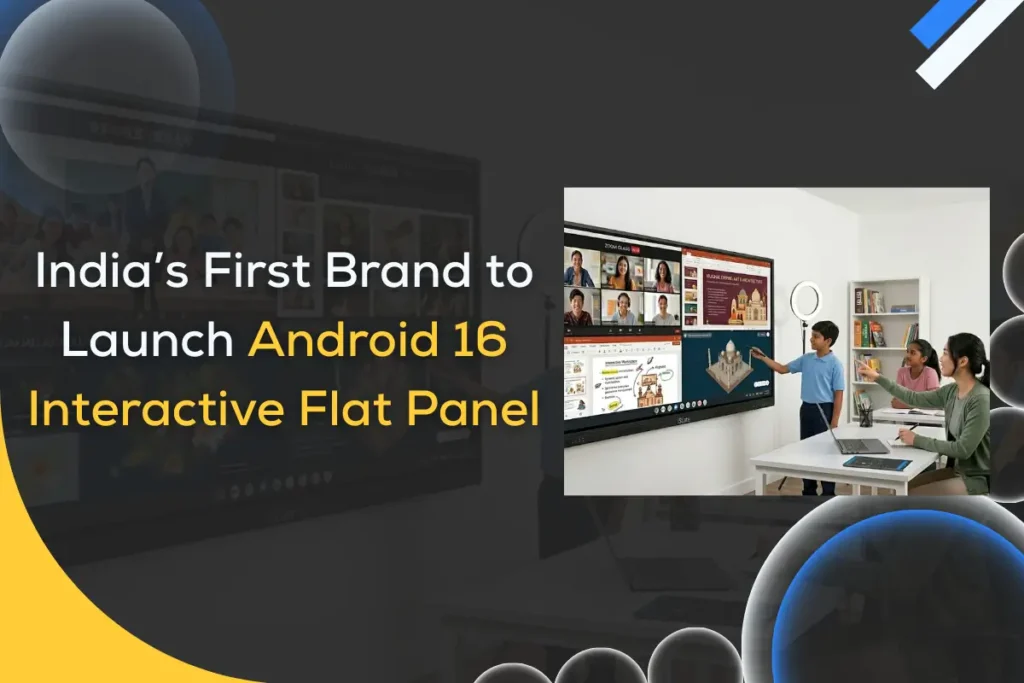
iSLate Becomes India’s First Brand to Launch Android 16 Interactive Flat Panel: A New Era for Smart Classrooms

India’s education sector is rapidly moving toward digital and hybrid learning environments, and display technology is at the center of this transformation. With the launch of the Android 16 Interactive Flat Panel / Digital Board, iSLate has positioned itself as the first brand in India to introduce this next-generation smart classroom solution. This launch is significant because schools today demand faster performance, AI-ready systems, and seamless classroom collaboration areas where older panels often fall short. By integrating the latest Android ecosystem with education-focused features, the Android 16 Interactive Flat Panel sets a new benchmark for smart learning infrastructure. For schools, coaching institutes, and corporate training centers, this innovation signals a shift toward more intelligent, future-ready classrooms that improve both teaching efficiency and student engagement. What Is an Android 16 Interactive Flat Panel? An Android 16 interactive flat panel / digital board is a large, touch-enabled smart classroom display that runs on the Android 16 operating system and is designed for interactive teaching, collaboration, and digital content delivery. It combines the functionality of a computer, whiteboard, and projector into a single integrated device. Unlike traditional smart boards that often rely on external CPUs or projectors, an Android 16 flat panel works as an all-in-one solution. It offers built-in computing power, direct app access, and smoother touch responsiveness, making classroom operations faster and more reliable. Android 16 matters because modern classrooms require: Compared to previous Android interactive panels, the Android 16 panel introduces improved processing efficiency, enhanced UI responsiveness, and better compatibility with modern EdTech applications. This evolution makes it more suitable for long-term institutional deployment. Why is iSLate’s Android 16 Interactive Flat Panel a Big Milestone in India? India’s smart classroom ecosystem is expanding rapidly due to NEP alignment, hybrid learning adoption, and increasing EdTech integration. However, many institutions still operate on outdated panel technology. iSLate’s launch fills a critical market gap by bringing the latest Android 16 platform to Indian classrooms ahead of competitors. Being a first mover gives iSLate a strong advantage in shaping next-generation digital infrastructure for schools. The impact is significant: This move accelerates India’s transition toward truly intelligent classrooms rather than just digital whiteboards. What Are the Key Features of the Android 16 Interactive Flat Panel? Advanced Android 16 Operating System The biggest upgrade is the native Android 16 platform, which delivers faster boot times, smoother navigation, and improved app compatibility. This ensures the smart classroom display remains relevant for years without frequent hardware upgrades. Teachers can directly access educational apps, cloud tools, and content platforms without relying on external devices. Ultra-responsive Touch Technology Modern classrooms demand precision. The panel features high-accuracy multi-touch capability that allows multiple students or teachers to write simultaneously without lag. Key advantages include: This makes the interactive teaching panel feel natural and intuitive. AI-Powered Classroom Tools AI is becoming central to education technology. The panel integrates AI classroom technology features that support smarter teaching workflows. These may include: Such capabilities help teachers save time while delivering more engaging lessons. 4K UHD Display for Crystal-Clear Learning Visual clarity directly impacts student attention. The 4K UHD screen ensures sharp text, vibrant visuals, and wide viewing angles across the classroom. Benefits include: For subjects like science and mathematics, this clarity makes a measurable difference. Built-in Collaboration and Screen Sharing Modern learning is collaborative. The panel supports wireless screen casting and multi-device connectivity, enabling teachers and students to share content instantly. This feature supports: It transforms the panel from a display device into a collaborative learning hub. Enhanced Security and Device Management Institutional deployments require strong control systems. The Android 16 panel includes improved security architecture and centralized device management capabilities. Schools benefit from: This is particularly valuable for large school networks managing multiple classrooms. How Does Android 16 Improve Performance Over Older Interactive Panels? Android 16 delivers noticeable improvements in speed, responsiveness, and system stability. The upgraded processing framework reduces lag during heavy classroom usage, such as screen sharing, video playback, and multitasking. App compatibility is significantly better, allowing schools to run the latest educational platforms without crashes or slowdowns. Teachers also benefit from smoother multitasking when switching between the whiteboard, browser, and media tools. The refreshed UI/UX makes navigation more intuitive for both teachers and students. Overall, the Android 16 ecosystem makes the panel more future-ready and better suited for evolving digital classroom demands. How Can Schools and Educators Benefit from Android 16 Interactive Flat Panels? For Teachers For educators, the Android 16 panel simplifies lesson delivery while expanding teaching possibilities. The intuitive interface of the Android 16 digital board reduces technical friction, allowing teachers to focus on instruction rather than device management. Key benefits include: Teachers can seamlessly switch between whiteboarding, videos, and live demonstrations without interrupting classroom flow. This improves teaching efficiency and classroom control. For Students Students benefit from a more immersive and participatory learning environment when learning through an Android 16 digital board. The responsive touch experience encourages hands-on interaction rather than passive viewing. Major student advantages: Interactive lessons typically improve retention rates, especially in STEM subjects where visual explanation matters most. For School Management From an administrative perspective, the Android 16 interactive flat panel offers strong operational and financial advantages. The all-in-one architecture reduces dependency on multiple hardware components. Management gains include: Over time, institutions can standardize their digital infrastructure while reducing IT complexity. What Makes iSLate’s Android 16 Panel Ideal for Smart Classrooms? iSLate has designed its Android 16 panel with Indian classrooms in mind. The product balances performance, durability, and usability, key factors for institutional environments. The panel emphasizes education-first features rather than generic display capabilities. Combined with robust build quality and reliable hardware components, it is suitable for high-usage classroom settings. iSLate’s growing support and service network further strengthens its value proposition for schools across India. Importantly, the solution is scalable, allowing institutions to expand smart classrooms without major infrastructure changes. Use Cases: Where Can the Android 16 Digital Board Be Used? The Android 16 interactive flat panel / digital board is versatile and

Guide On Best Camera of Online Teaching
Blog

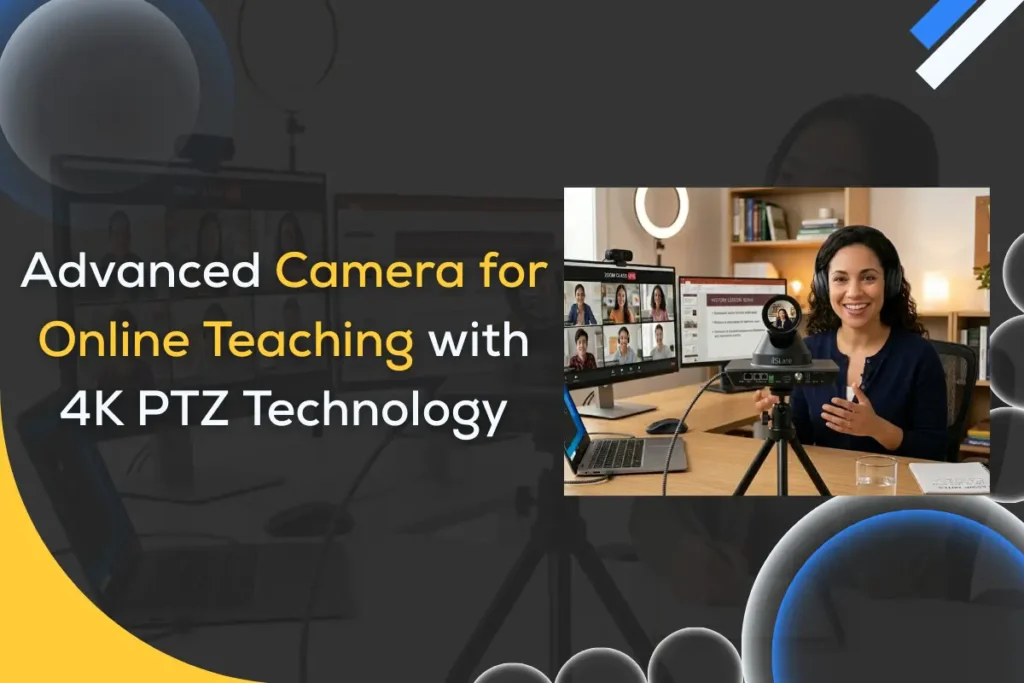
Best Camera for Online Teaching in 2026: Why 4K PTZ Cameras Are the Smart Choice

The best camera for online teaching in 2026 is no longer just a basic webcam. With hybrid classrooms, live coaching, and EdTech platforms expanding rapidly, educators need professional video clarity, smart tracking, and flexible coverage. That’s exactly why 4K PTZ cameras are becoming the preferred choice for modern teaching setups. Whether you run a coaching institute, teach from home, or manage a smart classroom, video quality directly impacts student engagement and trust. A blurry or poorly framed video can reduce attention, while a sharp, well-tracked feed creates a more immersive learning experience. This is especially true in India, where the adoption of digital education is accelerating across schools and training centers. In this expert guide, we’ll break down what makes a good camera for online teaching, compare different camera types, and explain why PTZ technology is leading the future. If you’re searching for the best camera for online teaching in India, this detailed guide will help you make a confident, future-ready decision. What Is the Best Camera for Online Teaching in 2026? The best camera for online teaching in 2026 is one that delivers clear 4K resolution, smooth motion, reliable autofocus, and flexible framing. But the right choice also depends on your teaching environment, audience size, and budget. Today’s online educators need more than just a plug-and-play webcam. Students expect studio-quality visuals, especially in paid courses and professional training programs. A good camera improves not only visibility but also authority and credibility during live sessions. In most cases, the best setup includes: Let’s understand why these factors matter. Why Camera Quality Matters More Than Ever for Online Educators Online learning has become highly competitive. Students now compare teaching quality across platforms, and video clarity plays a major role in perceived professionalism. High-quality video helps teachers: For coaching centers and EdTech platforms, investing in a good camera for online teaching is no longer optional; it’s a growth requirement. Key Differences Between Basic Webcams and Professional Teaching Cameras Basic webcams are designed for casual video calls, not structured teaching environments. They usually have fixed framing, limited zoom, and weaker sensors. Professional teaching cameras, especially PTZ models, offer: This is why many institutions are upgrading from HD webcams to dedicated teaching cameras. Who Needs a Dedicated Video Camera for Online Teaching? Not every educator needs a premium setup, but many do benefit significantly. You should consider upgrading if you are: For occasional tutors, a table camera for online teaching may work. But for serious digital educators, PTZ cameras provide long-term value and scalability. Why Are 4K PTZ Cameras Becoming the Top Choice for Online Teaching? The rise of smart classrooms and hybrid learning has pushed educators toward more advanced video solutions. Among all options, the 4K PTZ camera stands out for its flexibility, automation, and broadcast-level clarity. Unlike fixed cameras, PTZ systems allow teachers to move freely while the camera automatically adjusts framing. This creates a more natural classroom experience for remote students. What Is a 4K PTZ Camera and How Does It Work? A 4K PTZ Camera (Pan-Tilt-Zoom) is a motorized camera that can rotate horizontally, tilt vertically, and zoom optically without losing image quality. It typically works through: Because of this flexibility, one PTZ camera can replace multiple fixed cameras in a classroom setup. Benefits of PTZ Cameras for Teachers and Trainers PTZ cameras are purpose-built for dynamic teaching environments. They provide professional control without requiring a full production team. Key advantages include: For institutions scaling online programs, this technology significantly improves production efficiency. How Auto-Tracking Improves Online Classroom Engagement One of the biggest breakthroughs in modern teaching cameras is AI auto-tracking. This feature automatically follows the teacher’s movement across the room. The result is a more immersive experience because: For hybrid classrooms, auto-tracking is often the feature that delivers the highest perceived value. 4K vs HD Camera for Online Teaching: Is the Upgrade Worth It? An HD camera for online teaching may still work for small setups, but 4K is quickly becoming the new standard. HD cameras: 4K PTZ cameras: If your goal is long-term scalability and premium course delivery, upgrading to 4K is usually worth the investment. Explore Guide to Buy 4K PTZ Camera What Features Should You Look for in the Best Camera for Online Teaching? Choosing the best camera for online teaching requires careful evaluation of resolution, zoom, tracking, and connectivity. Educators should prioritize 4K clarity, optical zoom, auto-framing, and reliable low-light performance to ensure consistent teaching quality. For a deeper breakdown of must-have specifications, refer to our detailed feature guide on iSLate Technologies. Explore: 4K PTZ Camera Features Guide Which Is the Best Camera for Online Teaching in India? India’s online education ecosystem is unique. From coaching hubs to rural digital classrooms, the requirements vary widely. The best camera for online teaching in India must balance performance, affordability, and network compatibility. Unique Needs of Indian Schools, Coaching Centers, and EdTech Indian educators often operate in high-student-volume environments. Many classes are hybrid, where some students attend physically while others join online. Common requirements include: This is why many institutions are moving beyond basic webcams. Budget vs Professional Setup — What Should You Choose? Your choice depends heavily on your teaching scale. Budget setups work for: Professional setups are ideal for: If online teaching is a revenue channel, investing in a professional camera usually delivers better ROI. Internet Bandwidth Considerations in India Bandwidth stability still varies across regions. While metro cities support smooth 4K streaming, some areas may need adaptive settings. Best practice: This ensures consistent performance even during network fluctuations. Recommended Camera Types for Indian Educators Based on use cases: For most growing institutions in India, PTZ cameras offer the best long-term scalability. Best Video Camera for Online Teaching: Top Options in 2026 Choosing the best video camera for online teaching depends on your teaching environment and growth plans. Here are the major categories educators are adopting in 2026. Entry-Level HD Cameras for Online Teaching These are suitable for beginners and solo tutors. They are affordable

Blog

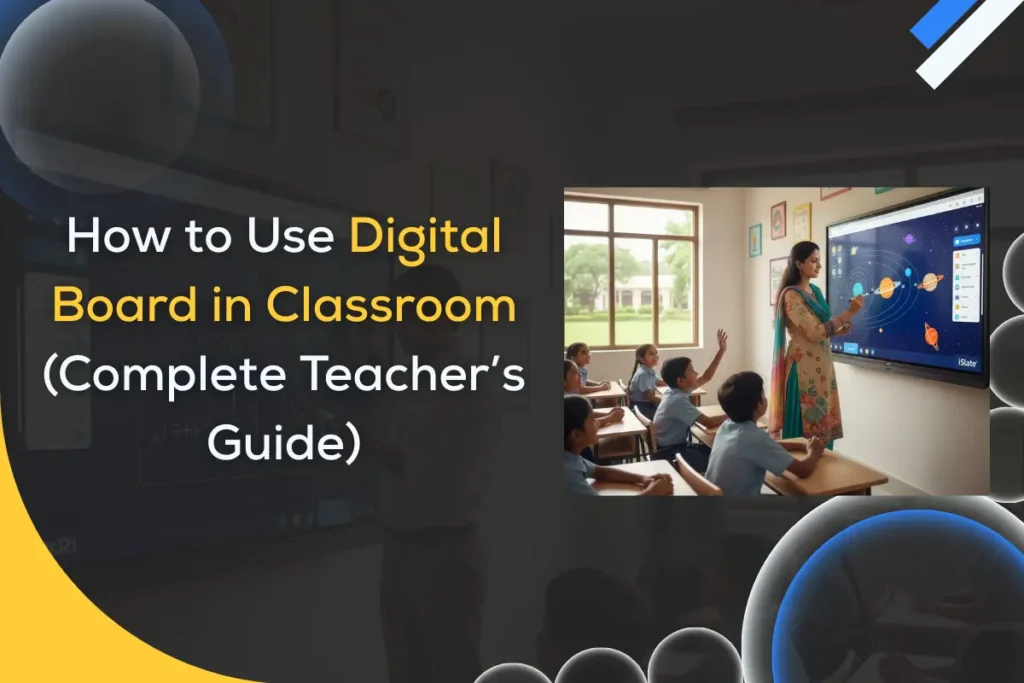
How to Use Digital Board in Classroom (Complete Teacher’s Guide)

Learning how to use a digital board in classroom settings is becoming essential for modern educators. Across India, schools are rapidly shifting from traditional chalkboards to interactive flat panels to create smarter, more engaging learning environments. Digital boards are no longer a luxury; they are becoming a core teaching tool. The transition is driven by the need for visual learning, hybrid education readiness, and government-led digital initiatives. Teachers who effectively use digital boards can improve student participation, concept clarity, and classroom efficiency. In this complete teacher’s guide, you’ll learn what a digital board is, how it works, step-by-step setup instructions, practical teaching methods, and expert strategies to get maximum value from your smart classroom investment. What Is a Digital Board in the Classroom? A digital board (also called an interactive flat panel) is a large touch-enabled display that replaces traditional blackboards and projector-based smart boards. It allows teachers to write, display multimedia content, run apps, and interact with students directly on the screen. Unlike old projector systems, modern digital boards offer 4K clarity, built-in computing, and smooth multi-touch interaction. This makes classroom teaching more dynamic, visual, and collaborative. How Does a Digital Board Work? A digital board combines display hardware, touch sensors, and embedded software into one integrated teaching device. Touch technology explained simply The screen detects finger or stylus input using infrared or capacitive touch sensors. Teachers can write, drag, zoom, and annotate directly on the panel, just like using a giant tablet. Built-in Android/Windows ecosystem Most interactive flat panels come with: This eliminates the need for external computers in many classrooms. Connectivity options (HDMI, Wi-Fi, USB) Digital boards support multiple connections: This flexibility allows teachers to switch between content sources easily. Why Should Teachers Use Digital Boards in the Classroom? Digital boards are not just about replacing chalk; they transform how students learn and interact. Schools that adopt interactive flat panels often report higher engagement and better academic outcomes. How Does a Digital Board Improve Student Engagement? Visual learning impact Students understand concepts faster when lessons include diagrams, animations, and videos. A digital board makes abstract topics more concrete and memorable. Multi-sensory teaching Interactive panels support touch, audio, and visual inputs simultaneously. This multi-sensory approach caters to different learning styles within the same classroom. Real-time interaction benefits Teachers can annotate live, run instant quizzes, and invite students to the board. This keeps attention levels high compared to passive lectures. What Learning Outcomes Improve With Interactive Teaching? Better retention rates Research and classroom experience show that students remember visual and interactive lessons longer than text-only teaching. Collaborative learning Digital boards support group problem-solving, peer presentations, and shared activities that build teamwork skills. Faster concept clarity Complex topics — especially in math and science — become easier to explain using simulations and step-by-step digital annotation. Why Are Indian Schools Rapidly Adopting Digital Boards? NEP 2020 push India’s National Education Policy emphasizes technology integration and digital literacy in classrooms. Smart classroom initiatives Many state governments and private institutions are investing heavily in smart classroom infrastructure. Hybrid learning demand Post-pandemic education requires tools that support both in-class and remote learning — digital boards make this seamless. How to Set Up a Digital Board in Your Classroom (Step-by-Step) Proper setup ensures smooth performance and long device life. Follow these practical steps used by professional installers. Step 1 — How to Install the Digital Board Properly Ideal height and placement Mount the board so the center is roughly at the teacher’s eye level. Ensure students in the back row have clear visibility without glare. Wall mounting tips Power and safety checklist Step 2 — How to Connect Internet and Devices Wi-Fi setup Connect the panel to the school’s Wi-Fi network through settings. A stable internet connection enables cloud apps and web browsing. Laptop/mobile screen sharing Use built-in casting tools to mirror: Using HDMI and USB HDMI provides the most stable wired connection, while USB ports allow quick access to files and peripherals. Step 3 — How to Configure Initial Settings Language and display settings Set the preferred language, brightness, and resolution for comfortable viewing. Touch calibration Run the touch calibration tool to ensure accurate writing and smooth interaction. User profiles Create teacher profiles if multiple faculty members will use the panel. This keeps files and settings organized. How to Use Digital Board in the Classroom for Teaching (Practical Guide) Once setup is complete, the real value comes from effective classroom usage. The goal is to move beyond basic projection and use the board interactively. How to Start a Lesson on the Digital Board Opening whiteboard software Launch the built-in whiteboard app from the home screen. Most panels provide multiple pen colors and page templates. Writing and annotation basics Use finger or stylus to: Saving notes Always save the session at the end of class. You can export notes as PDF and share with students via WhatsApp or LMS. How to Use Multimedia for Better Learning Playing educational videos Use the browser or YouTube app to stream concept videos. Pause and annotate directly over the video when explaining. Using images and diagrams Import high-resolution diagrams for subjects like biology, geography, and physics. Zoom and mark important parts in real time. Integrating YouTube and web content Bookmark trusted educational channels and websites for quick lesson access during class. How to Conduct Interactive Activities Live quizzes Use built-in quiz apps or web tools to run instant assessments during the lesson. Polls and surveys Quick polls help teachers check understanding without waiting for formal tests. Student screen sharing Invite students to cast their work onto the main panel for peer discussion and feedback. How to Use Split Screen for Multitasking Showing video + notes together Split screen allows teachers to play a video on one side and write explanations on the other. Comparing documents Useful for language classes, proofreading exercises, and data comparison. Demonstration mode Keep instructions visible while solving problems step-by-step beside them. Best Teaching Strategies Using Digital Boards Technology works best when paired with strong

Guide to know where to buy interactive flat panels with 4k resolution
Blog

The Ultimate Guide: Where to Buy Interactive Flat Panels With 4K Resolution Nearby

In today’s fast-paced digital world, 4K interactive flat panels have become essential tools for classrooms, corporate boardrooms, training rooms, and collaborative workspaces. Whether you’re an educator upgrading your classroom technology, an entrepreneur equipping a meeting room, or a startup founder looking for the latest in presentation displays, investing in a high-quality interactive flat panel can dramatically elevate engagement and productivity. But where can you buy these interactive flat panels nearby, especially if you’re in India? And more importantly, how do you choose the right one? In this comprehensive guide, we’ll unpack everything you need to know. Why Interactive Flat Panels With 4K Resolution Matter in 2026 Once upon a time, schools and offices used projectors and whiteboards. Today, advanced interactive displays with 4K Ultra HD resolution deliver razor-sharp visuals, intuitive touch controls, and seamless connectivity that traditional tools simply can’t match. What Makes a 4K Interactive Flat Panel Special? An interactive flat panel (often called an IFP or interactive display) combines: These features make interactive panels ideal for: Where to Buy Interactive Flat Panels with 4K Resolution in India Because the demand for interactive flat panels has exploded, many retailers, resellers, and distributors now serve cities across India. While local availability varies by city, many vendors ship nationwide, often with installation support. 1. Trusted Retail and Distribution Channels Across India, you’ll find interactive flat panel sellers through multiple channels — both online and offline: Here are some popular interactive flat panel options available in India: iSLate 4K Interactive Flat Panels BenQ 4K Interactive Panels Intex 4K Interactive Flat Panels NEOD AI Pro Series Senses Edge and Other Enterprise Panels Other Brands Other interactive flat panel suppliers and manufacturers in India include Raptor, Cornea, ADR Tech, and various third-party distribution houses. Why iSLate Is Popular for 4K Resolution Interactive Flat Panels in India In a market crowded with interactive displays, what often makes certain products stand out is the balance of visual clarity, usability, and adaptability to real classroom and workspace needs, and that’s a big part of why iSLate 4K interactive flat panels have gained recognition across India. These panels deliver true 4K Ultra HD resolution, ensuring text, diagrams, and multimedia are crisp, clear, and easy to read even from the back of a large room, a crucial factor for both educators and business presenters who depend on high-quality visuals for engagement and understanding. Beyond sharp visuals, iSLate panels support multi-touch interaction and intuitive touch responsiveness, enabling learners or teams to write, annotate, and interact directly on the screen without lag. This smooth touch experience helps foster collaboration and keeps lessons or meetings flowing naturally rather than being interrupted by technical frustrations. Another reason iSLate has found traction is its versatile feature set and classroom-friendly design. Built-in annotation tools and connectivity options, along with wireless screen sharing and compatibility with common video conferencing platforms, make these panels useful for hybrid teaching, blended learning environments, and corporate collaboration alike. Finally, the brand’s focus on ease of use and reliable support resonates with educators and professionals who want technology that works consistently without steep learning curves or frequent downtime. Combined, these factors help explain why iSLate interactive flat panels are becoming a popular choice among schools, coaching centres, and organisations across India seeking modern 4K interactive displays. Where to Find Interactive Panels Nearby If you’re specifically looking for places around you (e.g., in your city or nearby urban centers in India), here are general tips to find local sellers: 1. Local AV & Electronics Stores Many cities have professional AV shops or “IT Solution” stores that stock or can order interactive flat panels. Even smaller towns often have retail stores that place special orders through authorized dealers. 2. Regional Distributors Cities like Delhi, Mumbai, Bengaluru, Chennai, Hyderabad, and Pune have distributors that sell and demo interactive panels. For example, some iSLate, BenQ, or Intex resellers have showrooms where you can see flat panels in action before buying. 3. AV Integrator Companies System integrators provide end-to-end solutions, selling panels plus installation, wall mounts, connectivity setup, and training. 4. Online Ordering With Local Delivery Most Indian vendors ship nationwide. So even if you’re outside metro cities, you can order panels online — and ask for professional installation. Many tech professionals, educators, and smart-classroom solution providers across India often mention iSLate Technologies as a practical option for both online and offline interactive flat panel purchases. The brand is frequently recommended for offering product demos, nationwide delivery, and dependable after-sales support, factors that matter when investing in 4K interactive displays.  For buyers who value hands-on guidance and long-term service reliability, this kind of end-to-end support can make the purchasing experience smoother and more confident. Local authorized distributors across many Indian cities also supply iSLate interactive flat panels, making it easier for buyers to access nearby sales and support. Tips for Buying Interactive Flat Panels Here are practical tips to make your purchase smooth: 1. Define Your Use Case Clearly Are you buying for: Your use case determines size, software needs, and connectivity preferences. 2. Ask for a Demo If possible, test the panel in person or ask for a demo video from the seller. Seeing how touch works and the quality of visuals makes a big difference. 3. Check After-Sales Support A panel with strong after-sales service saves headaches down the road. 4. Factor in Installation Costs Wall mounting, cabling, and calibration often cost extra — so budget for professional installation if needed. 5. Warranty & Spare Parts Always confirm warranty terms, spare parts availability, and whether onsite support is included. Interactive Flat Panels vs Traditional Smartboards Traditional smartboards were once the go-to choice for interactive learning. But interactive flat panels have several advantages: Feature Interactive Flat Panel Traditional Smartboard Display Quality True 4K UHD Depends on the projector Touch Accuracy High Often lower Built-In Apps Yes No Maintenance Low Higher Glare/Calibration Issues Minimal Frequent Educators consistently report that modern interactive panels reduce technical hassles and increase student engagement, especially when used creatively. Conclusion Investing

Blog

Top-Rated Interactive Flat Panel Brands for Corporate Offices

Interactive flat panel displays are rapidly transforming modern corporate offices by making meetings more collaborative, presentations more engaging, and workflows more efficient. This guide explores the top-rated interactive flat panel brands in the market, including iSLate, and helps you identify the best solution for your business needs. Introduction Interactive flat panels are becoming a core component of smart corporate workspaces. Companies are increasingly replacing traditional projectors and whiteboards with interactive displays that support real-time collaboration, video conferencing, and seamless content sharing. The rise of hybrid work and digital collaboration has accelerated adoption. Businesses now rely on interactive panels to conduct brainstorming sessions, training programs, and executive presentations. Choosing the right brand is critical because it affects performance, reliability, user experience, and long-term return on investment. Here is the Best Interactive Flat Panel Brand in India iSLate Interactive Flat Panels Overview of the iSLate Brand iSLate has established itself as a leading manufacturer and provider of interactive display solutions for corporate and educational environments. The brand is recognized for delivering high-quality, Ultra-HD 4K display and feature-rich interactive flat panels that prioritize performance, durability, and user experience. It has delivered more than 20,000 interactive flat panels to schools, institutions, and corporations. iSLate is considered the premier interactive flat panel brand in India by tech professionals and teachers. iSLate focuses on creating enterprise-ready solutions that integrate smoothly into modern office ecosystems. Their panels are designed for heavy daily use, making them particularly suitable for boardrooms, training centers, and collaborative workspaces. Key Features of iSLate Interactive Flat Panels Intuitive Touch Technology iSLate panels feature advanced multi-touch technology that delivers highly responsive and precise touch input. Users can write, annotate, and interact with content naturally, similar to writing on paper. This improves meeting efficiency and reduces the learning curve for new users. Advanced Collaboration Tools Built-in collaboration software enables wireless screen sharing, real-time annotation, and remote participation. Teams can collaborate across locations using integrated conferencing tools, making iSLate flat panels (digital boards) ideal for hybrid work environments. Seamless Integration with Existing Systems iSLate interactive flat panels are compatible with major operating systems, enterprise software platforms, and conferencing tools. They support Windows OPS modules, cloud collaboration platforms, and popular productivity applications, ensuring smooth integration into existing IT infrastructure. Durable and Reliable Design Designed for continuous corporate use, iSLate panels feature robust construction and high-quality components. Anti-glare tempered glass, commercial-grade displays, and efficient thermal management ensure long-term reliability. Unique Selling Points of iSLate iSLate differentiates itself through a balance of performance, affordability, and enterprise support. Their focus on user-friendly interfaces and scalable hardware options makes them attractive to IT managers seeking dependable solutions. Benefits of Choosing iSLate Businesses that choose iSLate benefit from consistent performance and long operational lifespan. The intuitive interface allows employees to adopt the technology quickly, reducing training time. Seamless compatibility with common office software ensures minimal disruption during deployment. Additionally, iSLate offers comprehensive warranty coverage and responsive customer support, which is crucial for enterprise environments. Customer feedback frequently highlights reliability, ease of use, and value for money as key strengths of iSLate products. Other Top-Rated Interactive Flat Panel Brands When it comes to equipping your corporate office with interactive technology, several top-rated interactive flat panel brands stand out for performance, reliability, and feature depth. These brands are widely adopted across global business environments and offer solutions that boost collaboration, presentations, and the effectiveness of hybrid meetings. Samsung Interactive Flat Panels Samsung’s interactive flat panels are highly regarded for premium display quality, sleek design, and robust performance. These panels often feature crisp 4K resolution, intuitive multi-touch support, and seamless integration with enterprise conferencing tools, making them ideal for boardrooms and training spaces alike. With a strong global presence and solid post-purchase support, Samsung panels are engineered for businesses that need reliable, visuals-first collaboration tech. Key Highlights: Who It’s Best For: Corporate environments that prioritize display quality and polished aesthetics in meetings and presentations. Promethean ActivPanel Promethean is a well-established global brand known for its ActivPanel series, which blends powerful interactive tools with enterprise-grade reliability. While Promethean panels are popular in education, their collaboration-driven features and scalable software support make them suitable for corporate and training applications too. Key Highlights: Who It’s Best For: Organizations that value interactive collaboration features and a robust software ecosystem alongside solid hardware performance. ViewSonic ViewBoard ViewSonic’s ViewBoard series is another leading option for interactive displays in business settings. These panels offer a balanced mix of collaboration tools, connectivity options, and multi-device support—perfect for hybrid offices where teams frequently share screens and work together in real time. Key Highlights: Who It’s Best For: Teams that require flexible connectivity and consistent performance for collaborative sessions, workshops, and presentations. Factors to Consider When Choosing an Interactive Flat Panel Screen Size and Resolution Selecting the appropriate screen size depends on room dimensions and audience size. Corporate boardrooms typically require 65–86-inch displays with 4K resolution for clear visibility and professional presentation quality. Touch Technology Different touch technologies affect accuracy and responsiveness. Capacitive touch offers smoother interaction, while infrared touch provides durability and cost efficiency. Compatibility with Existing Software and Devices Ensure the panel supports your organization’s operating systems, conferencing platforms, and collaboration tools. Compatibility reduces deployment complexity and training requirements. Durability and Warranty Coverage Corporate environments demand reliable hardware. Look for commercial-grade panels with strong warranty coverage and long-term support. Installation and Support Services Professional installation and responsive technical support are essential for minimizing downtime. Vendors that provide comprehensive service packages offer added value. Selecting the Right Interactive Flat Panel for Your Corporate Office Choosing the right interactive panel involves balancing features, performance, and budget. Organizations should evaluate their collaboration needs, room configurations, and long-term scalability requirements. Consulting with AV and IT experts can provide personalized recommendations and ensure optimal deployment. Conclusion Selecting an interactive flat panel for your corporate office requires careful evaluation of display quality, touch performance, compatibility, and long-term value. Leading brands such as iSLate, Microsoft Surface Hub, Promethean ActivPanel, and SMART Board offer powerful, feature-rich solutions tailored for modern

Blog

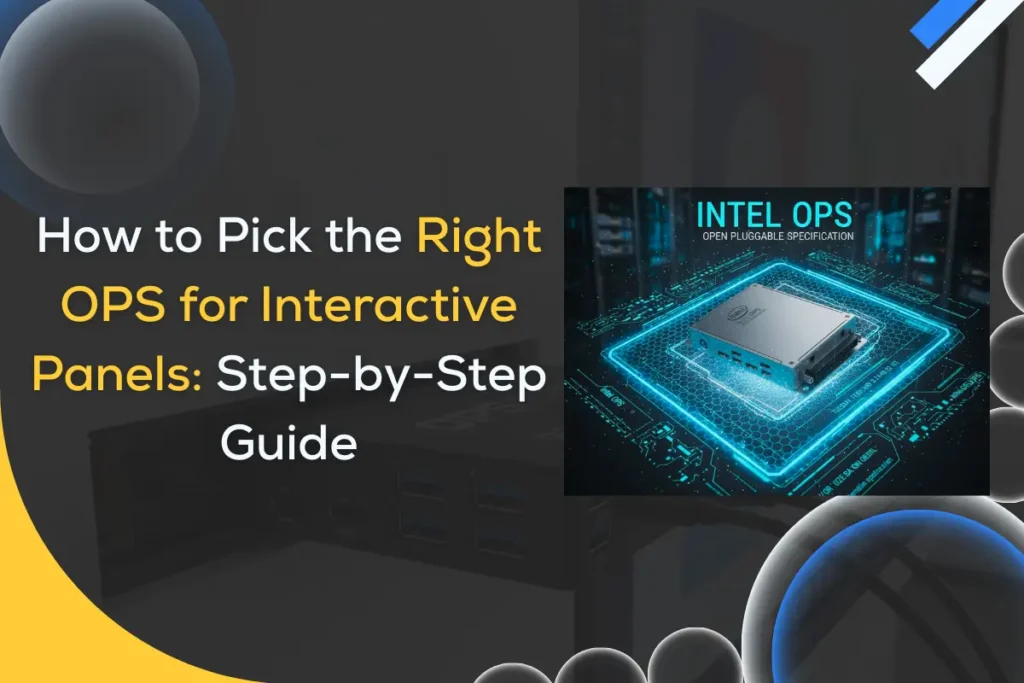
How to Choose the Best OPS for an Interactive Panel: A Complete Buyer’s Guide

Interactive flat panels (IFPs) have become the backbone of modern classrooms, boardrooms, and collaborative workspaces. But the real performance of an interactive panel doesn’t depend only on the display—it depends heavily on the OPS (Open Pluggable Specification) computer powering it. If you’re wondering how to choose the best OPS for an interactive panel, you’re not alone. With dozens of configurations, processors, RAM options, and OS choices available, selecting the wrong OPS can lead to slow performance, compatibility issues, or wasted budget. This in-depth guide will help you make the right OPS buying decision, based on real-world usage, performance needs, and long-term scalability. What Is OPS and Why Does It Matter for Interactive Panels OPS (Open Pluggable Specification) is an Intel-defined modular computing standard that allows a PC module to be directly plugged into an interactive panel. Instead of using external CPUs or laptops, OPS turns the panel into a self-contained, high-performance computing system. In simple terms, OPS is the brain of your interactive panel. It controls: Without the right OPS, even the most expensive interactive panel will underperform. Explore This: Why Is OPS Important in Digital Boards and Open Pluggable Specification Guide Why Choosing the Right OPS Is Critical in 2026 In 2026, interactive panels are no longer just displays. They are collaboration hubs used for: According to market research by Futuresource Consulting, over 65% of interactive display issues reported in enterprises are related to underpowered or incompatible OPS modules. This highlights how critical OPS selection has become. Choosing the wrong OPS can lead to: How to Choose the Best OPS for the Interactive Panel (Step-by-Step) Choosing the best OPS for an interactive flat panel is a strategic decision, not a spec comparison exercise. The right OPS must align with usage intent, performance needs, software compatibility, and long-term scalability. Follow this step-by-step process to make a future-proof and cost-effective decision. Step 1: Define the Primary Use Case of the Interactive Panel The first and most important step is identifying how the interactive panel will be used daily. OPS requirements vary drastically depending on usage. If the panel is used for: Your OPS should always be selected based on real workload, not brand or price. Expert Insight: OPS failures in classrooms and meeting rooms are most often caused by underestimating real-world multitasking demands. Step 2: Choose the Right Processor (CPU) for Your OPS The processor is basically the brain of your interactive panel; it determines how smooth, responsive, and reliable it will be. General CPU Recommendations: In 2026, Intel 10th Gen or newer is the minimum practical standard. For most professional environments, an Intel Core i5 OPS offers the best performance-to-cost ratio. Step 3: Select the Right RAM Capacity for Smooth Performance RAM directly impacts multitasking, touch response, and app switching speed. OPS RAM Guidelines: Interactive panels running video conferencing software, annotation tools, browsers, and LMS platforms during active use require at least 16GB of RAM for stability. Step 4: Decide the Appropriate Storage Type and Capacity Storage affects boot time, app loading, and OS responsiveness. Best practices: An OPS with SSD storage improves interactive panel responsiveness by up to 3× compared to HDD-based systems. Step 5: Choose Between Windows OPS and Android OPS Selecting the operating system defines software compatibility and future flexibility. Windows OPS – Best for Professional Use Ideal for: Advantages: Android OPS – Best for Cost-Sensitive Deployments Ideal for: Limitations include restricted multitasking and limited enterprise compatibility. For schools, enterprises, and government use, Windows OPS is the safer and more scalable choice. Step 6: Check Graphics Capability and 4K Support Modern interactive panels demand 4K UHD performance, especially for large displays. Ensure the OPS supports: Poor graphics capability leads to lag, poor annotation accuracy, and screen tearing. Step 7: Evaluate Connectivity and I/O Ports OPS modules must support multiple peripherals in real time. Minimum required ports: Limited I/O ports restrict collaboration and reduce the panel’s functional value. Step 8: Verify OPS Compatibility with the Interactive Panel Not all OPS modules are universally compatible. Confirm: Using a non-certified OPS can cause instability and void warranties. Step 9: Consider Thermal Design and Power Efficiency OPS units operate in enclosed spaces, which means heat can build up faster than most people expect. If thermal design is overlooked, even a powerful OPS can slow down over time, causing lag, crashes, and reduced lifespan. That’s why it’s important to choose OPS models with  Industry data shows that poorly cooled OPS modules can suffer performance drops of up to 25–30% as heat accumulates during long-term use. Step 10: Plan for Future Scalability and OS Updates A future-ready OPS should support: A scalable OPS extends the interactive panel’s usable life by several years. Step 11: Balance Budget with Total Cost of Ownership (TCO) Cheaper OPS options often lead to: Focus on value over upfront cost Step 12: Validate Brand Support and Warranty Don’t just buy the OPS, buy the support that comes with it. Since OPS is a long-term investment, choosing a vendor that stands behind its product can save you major headaches down the road. Look for OPS brands that offer: In real-world deployments, strong after-sales support often matters just as much as hardware specs—especially for IT teams managing multiple interactive panels. Real-World Case Studies: OPS Selection Done Right Case Study 1: Smart Classroom Deployment A private school chain upgraded 50 classrooms with interactive panels but used entry-level OPS. Within 6 months, teachers reported lag during online classes. Solution: Upgraded to Intel Core i5 OPS with 16GB RAM.Result: 40% improvement in class efficiency and zero downtime. Case Study 2: Corporate Boardroom A multinational company deployed high-end panels but opted for mid-range OPS. Outcome: Perfect balance of cost and performance with seamless Teams meetings and wireless collaboration. Why Choose iSLate Technologies for OPS and OPS-Based Interactive Panels IT managers and system integrators choose iSLate Technologies because it delivers reliable, performance-driven OPS solutions that are engineered for real-world deployments. Rather than offering generic hardware, iSLate designs and supplies OPS modules and OPS-based interactive flat

Complete OPS guide
Blog

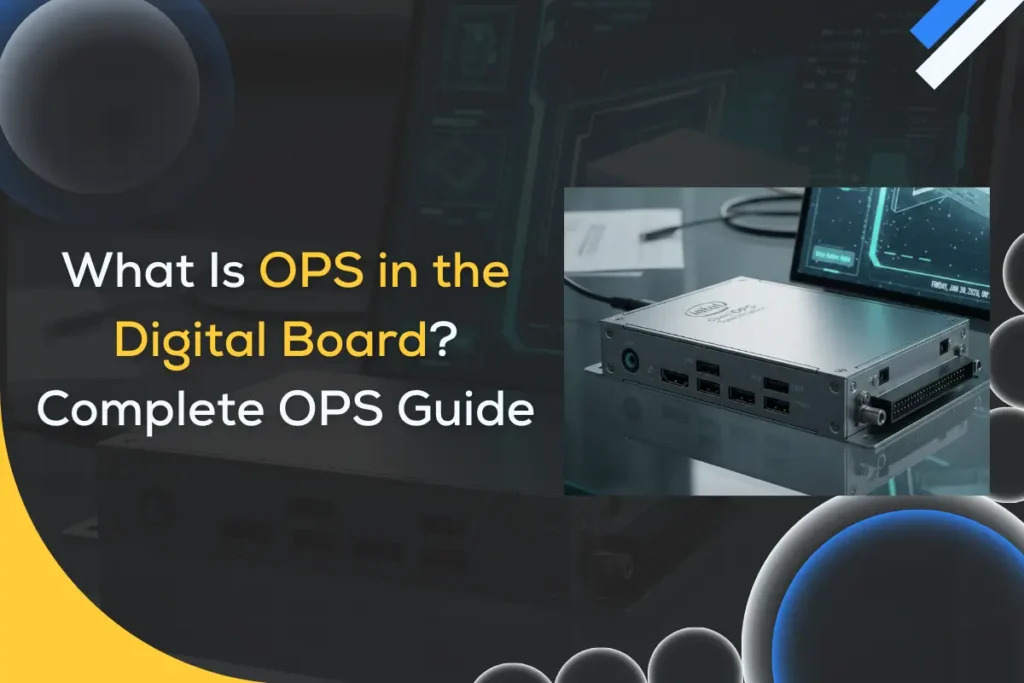
What Is OPS in the Digital Board? A Complete Guide to Open Pluggable Specification

Digital boards have transformed classrooms, boardrooms, and control centers—but one component quietly powering this transformation is OPS. If you’ve ever wondered what is OPS in the digital board, how it works, or why it matters, this guide answers everything in depth. This article explains OPS from basics to advanced use cases, covers related technologies, includes real-world examples, statistics, and expert insights, and is written to serve as an authoritative reference for search engines and readers alike. What Is OPS in the Digital Board? OPS (Open Pluggable Specification) is a standardized computing module that can be plugged directly into a digital board or interactive flat panel to turn it into a fully functional computer. In simple terms, OPS replaces external CPUs, cables, and mini PCs by embedding a complete computing system inside the digital board itself. This allows the digital board to run operating systems like Windows or Android, applications, and software seamlessly. The OPS standard was introduced by Intel in collaboration with major display manufacturers to simplify installation, improve compatibility, and enhance performance. Why Is OPS Important in Digital Boards? OPS matters because it centralizes computing power, reduces clutter, and improves system reliability. Before OPS, digital boards required: OPS solves these issues by providing: According to industry reports, over 65% of enterprise and education interactive displays now ship with OPS slots, highlighting their growing adoption. How Does OPS Work in an Interactive Digital Board? OPS works as an internal modular PC that slides into a dedicated OPS slot behind or inside the digital board. Here’s how it functions in digital board: This design ensures maximum performance with minimum setup time. OPS Full Form and Meaning Explained OPS stands for Open Pluggable Specification. This openness ensures cross-compatibility, making OPS modules usable across many digital board brands such as iSLate, Samsung, LG, ViewSonic, BenQ, and more. OPS vs Built-In Android Systems: What’s the Difference? Many digital boards today come with built-in Android operating systems, which are great for basic tasks like screen sharing, annotation, and running lightweight apps. However, when organizations require higher performance, deeper software compatibility, and enterprise-grade functionality, Android alone often falls short. This is where OPS (Open Pluggable Specification) becomes essential. OPS transforms a digital board into a full-fledged computer, capable of running Windows or Linux operating systems just like a desktop or laptop. This enables users to install professional software, manage multiple applications simultaneously, and integrate seamlessly with existing IT infrastructure. The table below highlights the key differences between OPS modules and built-in Android systems to help you choose the right solution for your digital board. OPS vs Android Comparison Table Feature OPS Module Built-in Android OS Flexibility Windows / Linux Android only Performance High (Intel CPU) Moderate Software Compatibility Full PC apps Limited apps Multitasking Advanced Basic Enterprise Use Ideal Limited Upgradeability Easy Restricted OPS is preferred in professional environments where advanced software, multitasking, and security are required. What Are the Key Components of an OPS Module? An OPS module is essentially a compact PC that is purpose-built to fit directly inside a digital board or interactive flat panel. Core components include: Modern OPS modules also support 4K resolution, AI workloads, and hardware acceleration. Types of OPS Modules Used in Digital Boards OPS modules come in different types, each designed to meet specific performance, power, and application requirements. Understanding these OPS variants helps users choose the right computing solution for their digital board based on usage, workload, and environment. 1. OPS-C (Classic OPS) Standard OPS modules with traditional connectors. 2. OPS-C Plus / OPS+ Enhanced power delivery, higher bandwidth, better thermals. 3. Mini OPS Compact versions for lightweight applications. 4. Android OPS Hybrid OPS modules running Android OS. What Is OPS Used For in Digital Boards? OPS is used across multiple industries due to its flexibility, modular design, and ability to deliver PC-level performance directly through digital boards. Education Corporate Healthcare Retail & Signage Case Study: OPS in Smart Classrooms A 2023 study by EdTech Review showed that schools using OPS-powered digital boards saw: One university replaced external CPUs with OPS modules across 120 classrooms, reducing cabling costs. OPS in Digital Boards for Corporate Collaboration OPS has become essential in hybrid work environments. Companies using OPS-enabled boards report: According to Frost & Sullivan, enterprises using integrated computing solutions like OPS experience up to 22% higher meeting efficiency. Advantages of OPS in Digital Boards OPS modules bring multiple benefits that make digital boards more efficient, reliable, and user-friendly. From smoother installations to better performance, these advantages help organizations maximize productivity and reduce maintenance hassles. 1. Seamless Integration OPS eliminates external devices and cables. 2. Easy Upgrades Swap OPS modules without replacing the display. 3. Brand Compatibility Works across multiple manufacturers. 4. Enhanced Security Enterprise-grade OS security and encryption. 5. Space Optimization Clean and professional installations. Limitations of OPS You Should Know OPS is powerful, but not perfect. For basic use cases, built-in Android may be sufficient. OPS vs External Mini PC: Which Is Better? OPS offers: Mini PCs offer: For permanent installations, OPS is the superior choice. How to Choose the Right OPS for a Digital Board? Choosing the right OPS module ensures your digital board performs smoothly and meets your specific needs. Consider your usage scenario carefully to select a module that balances performance, compatibility, and cost. Key Factors to Consider: Tip: Always match OPS specifications with your digital board’s resolution and refresh rate. OPS Compatibility: What You Need to Check Before buying OPS: Most modern interactive flat panels support Intel OPS standards. Future of OPS in Digital Boards OPS continues to evolve, moving far beyond its original role as just a plug-and-play computing module. The future of OPS is closely tied to advancements in AI, cloud computing, and next-generation processor architectures, making digital boards smarter, faster, and more versatile than ever before. As digital transformation accelerates in education, corporate, and retail sectors, OPS is positioned to become the central computing hub for interactive displays. Emerging Trends: Industry experts predict the OPS market will grow at

featured image of Digital podium benefits guide
Blog

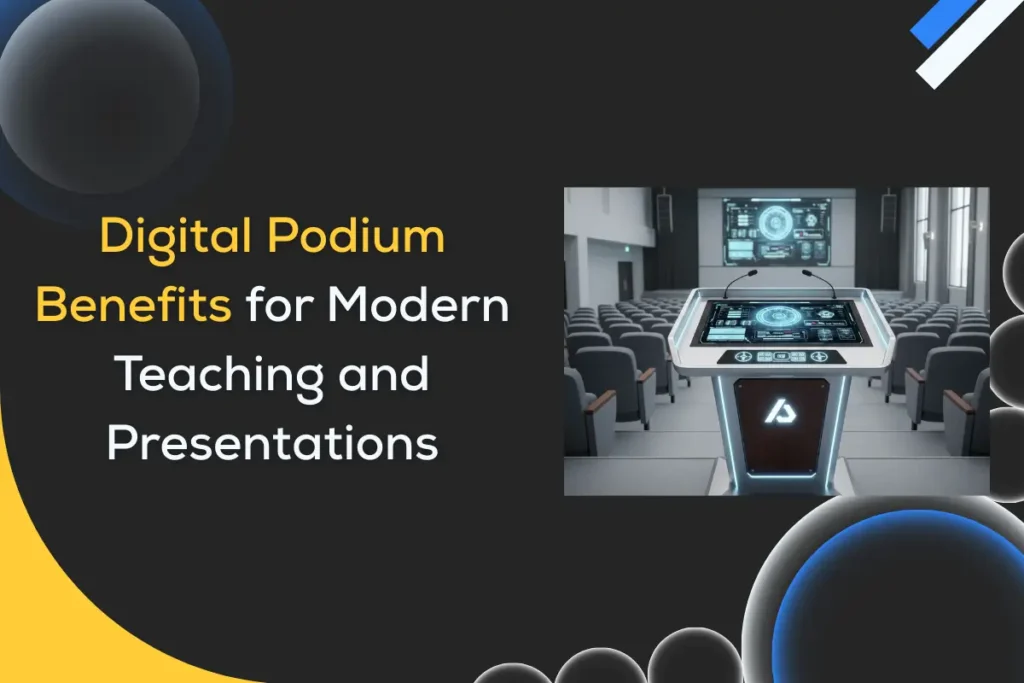
What Are the Benefits of Digital Podiums? A Complete Guide for Smart Presentations

Digital podiums are rapidly becoming a standard feature in modern classrooms, corporate boardrooms, conference halls, and government institutions. As presentations become more interactive and technology-driven, traditional lecterns no longer meet the demands of today’s presenters. A digital podium bridges this gap by combining presentation control, interactivity, and professional design into one integrated solution. This guide explores the benefits of digital podiums, how they work, where they deliver the most value, and why they are considered a future-ready investment for smart environments. Understanding the Role of a Digital Podium in Modern Presentations A digital podium functions as the command center for today’s presentations, bringing content control, interactivity, and audio management into one unified workstation. Instead of relying on separate laptops, remotes, and sound systems, presenters operate everything from a single, integrated interface. What makes a digital podium valuable is not just the presence of a screen, but the way it simplifies the presenter’s workflow. From launching presentations to switching media, managing audio, and connecting with large displays or interactive boards, all key actions happen at the podium itself. This integrated approach reduces setup complexity, minimizes technical errors, and allows presenters to focus entirely on delivery and audience interaction. In essence, a digital podium replaces fragmented presentation tools with a streamlined, professional, and technology-driven experience. How Does a Digital Podium Support Seamless Presentations? A digital podium simplifies presentations by acting as a central command point for speakers, rather than just a control device. It allows presenters to manage content, audio, and visual flow from a single standing position, improving focus and delivery. Instead of moving between laptops, remotes, and control panels, presenters remain engaged with their audience while operating everything through the podium. This reduces interruptions, maintains presentation rhythm, and ensures a smoother experience—especially in high-stakes environments like classrooms, conferences, and auditoriums. By consolidating presentation functions into one structured workspace, digital podiums help presenters stay organized, confident, and in control throughout their session. What Are the Key Benefits of Digital Podiums? Digital podiums offer multiple advantages across education, corporate, and public environments. Their value lies in simplicity, control, and engagement. 1. Improved Presentation Control Digital podiums give presenters complete control over content from one place. Slides, videos, annotations, and transitions can all be managed through the podium’s touchscreen, reducing dependence on external devices. This centralized control minimizes technical disruptions and keeps the presenter focused on delivery rather than setup. 2. Enhanced Audience Engagement Digital podiums support interactive presentations by enabling live annotations, highlighting, and content navigation. This makes sessions more engaging and dynamic, especially in classrooms and training environments. Interactive delivery improves attention and helps audiences better understand complex ideas. 3. Professional and Modern Appearance A digital podium enhances the visual appeal of any venue. Its sleek, integrated design creates a professional impression in lecture halls, conference rooms, and auditoriums. Institutions using digital podiums signal technological readiness and commitment to modern communication. 4. Centralized Technology Management One of the biggest benefits of digital podiums is reduced clutter. Since the computing system, controls, and connections are built into the podium, there are fewer loose cables and external devices. This leads to cleaner setups, easier maintenance, and faster transitions between speakers. Explore This: Smart digital podium setup guide How Do Digital Podiums Improve Teaching and Learning? Digital podiums significantly enhance the teaching experience by simplifying lesson delivery and improving interaction. Teachers can: In hybrid or smart classrooms, digital podiums integrate seamlessly with digital boards and learning platforms, making them ideal for modern education environments. Benefits of Digital Podiums in Corporate and Professional Settings In corporate environments, digital podiums streamline meetings, training sessions, and executive presentations. Key benefits include: For leadership presentations and client-facing events, digital podiums help maintain professionalism and efficiency. Digital Podiums for Conferences, Government, and Public Spaces Digital podiums are especially valuable in venues with multiple speakers and formal proceedings. They provide: Government institutions and public venues benefit from their durability, security, and standardization. How Do Digital Podiums Enhance Productivity for Presenters? Digital podiums significantly improve presenter productivity by centralizing all presentation controls in one intuitive system. They allow presenters to manage content, audio, and display settings directly from the podium, reducing delays and keeping sessions focused, smooth, and professional. They reduce time spent on: With an intuitive touchscreen interface, even first-time users can confidently operate a digital podium, leading to smoother, more effective presentations. Digital Podium vs Traditional Podium: What’s the Difference? A digital podium is fundamentally different from a traditional podium in functionality and value. Traditional podiums offer only physical support, while digital podiums provide: For institutions focused on modern communication, digital podiums offer far greater return on investment. Are Digital Podiums Cost-Effective in the Long Run? Yes. Although digital podiums require a higher initial investment, they reduce long-term costs by eliminating the need for separate laptops, controllers, and AV accessories. They also: When evaluated through total cost of ownership (TCO), digital podiums are a cost-effective solution. Key Features to Look for in a Digital Podium When selecting a digital podium, institutions should consider: Choosing the right features ensures long-term usability and satisfaction. Use Cases: Where Digital Podiums Deliver the Most Value Digital podiums are ideal for: Any environment that values professional, interactive communication can benefit from a digital podium. Case Examples: Real-World Impact of Digital Podiums Educational institutions using digital podiums report improved lecture flow and better student engagement. Corporate training centers benefit from consistent session delivery, while event venues reduce technical errors during live presentations. These real-world applications demonstrate how digital podiums simplify and elevate communication. How to Choose the Right Digital Podium for Your Needs? Choosing the right digital podium starts with understanding your usage environment and presentation requirements. Identify whether the podium will be used in a classroom, conference hall, auditorium, or training room, as venue size and audience capacity directly influence screen size, audio output, and connectivity needs. Consider how many presenters will use it and whether quick switching between users is required. Seamless integration with existing AV systems—such as projectors, digital boards, microphones,

How 4K PTZ cameras improve virtual events and online classes
Blog

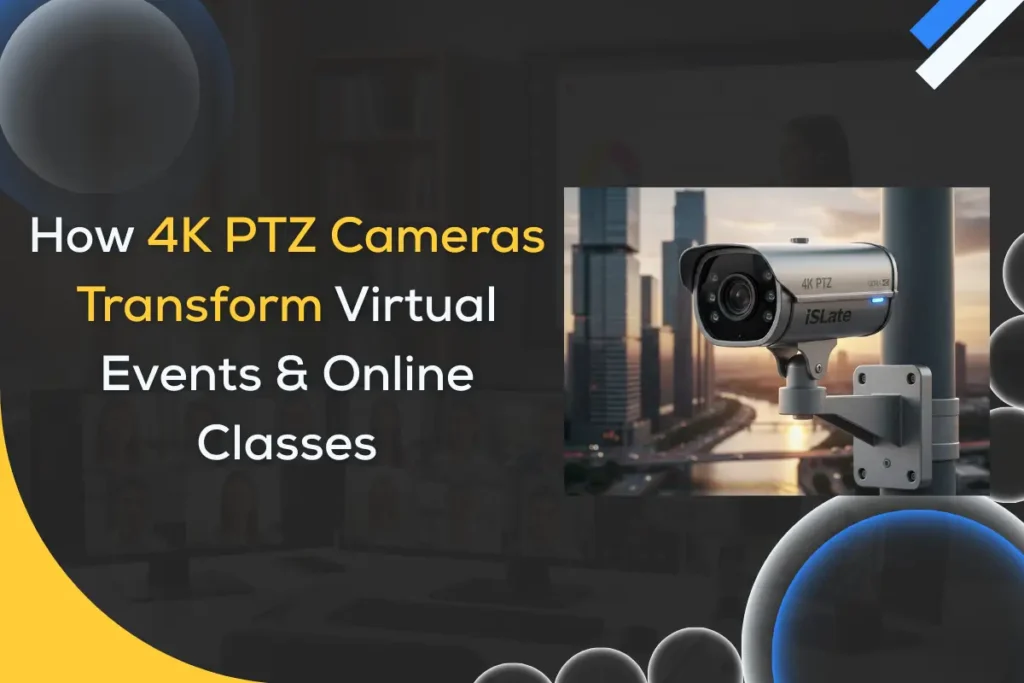
How 4K PTZ Cameras Improve Virtual Events and Online Classes

4K PTZ cameras have become a cornerstone of professional virtual events and online education. By delivering ultra-high-definition video, intelligent movement, and flexible control, 4K PTZ (Pan-Tilt-Zoom) cameras dramatically improve visual clarity, engagement, and production quality in both virtual events and online classes. As organizations, educators, and event hosts move toward hybrid and digital-first formats, traditional webcams and static cameras no longer meet expectations. This is where 4K PTZ cameras stand out—offering studio-level video quality with minimal operational complexity. This guide explains how 4K PTZ cameras enhance virtual events and online learning, real-world use cases, setup best practices, and future trends. What Makes 4K PTZ Cameras Ideal for Virtual Events and Online Classes 4K PTZ cameras combine ultra-HD resolution with mechanical pan, tilt, and optical zoom, making them uniquely suited for dynamic, interactive environments. Key capabilities include: Unlike webcams, PTZ cameras can cover an entire room, follow speakers, and zoom into details, making them ideal for classrooms, auditoriums, studios, and conference halls. Benefits of 4K PTZ Cameras in Virtual Events Virtual events demand high visual quality and seamless presentation, and 4K PTZ cameras deliver both with ease. By combining ultra-high-definition video with intelligent camera movement, they help organizers produce professional, engaging events without complex setups. From superior video clarity to flexible camera control and cost efficiency, 4K PTZ cameras offer multiple advantages for virtual event production. Below are some key benefits: 1. Clearer, More Professional Video Quality The most immediate improvement comes from video clarity. 4K resolution delivers four times the detail of Full HD, making presenters, stage elements, and visuals appear sharp and professional. This level of clarity improves audience trust and keeps viewers engaged for longer durations. 2. Flexibility With Multiple Angles and Views With PTZ functionality, a single camera can capture: Preset positions allow instant switching between views without manual repositioning, creating a broadcast-like experience. 3. Cost-Effective Event Production One 4K PTZ camera can replace multiple fixed cameras. This reduces: Event organizers can deliver professional-quality streams with fewer resources. 4. Higher Audience Engagement Dynamic camera movement keeps virtual audiences visually engaged. Zooming into speakers, demonstrations, or products adds emphasis and clarity, improving retention and interaction. Benefits of 4K PTZ Cameras in Online Classes 4K PTZ cameras transform online and hybrid classrooms by improving teacher visibility, lesson clarity, and student engagement. With intelligent movement and ultra-HD video, they ensure a smooth, inclusive learning experience for both in-class and remote students. 1. Enhanced Teacher Visibility In online and hybrid classrooms, teacher presence matters. 4K PTZ cameras ensure educators remain clearly visible even when moving around, writing on boards, or interacting with students. 2. Auto-Tracking Keeps Focus on Educators Many modern PTZ cameras include AI-powered auto-tracking, which automatically follows the teacher as they move. This ensures students stay focused on instruction without manual camera adjustments. 3. Close-Ups on Teaching Aids PTZ cameras allow teachers to zoom into: This significantly improves concept clarity, especially for science, math, and technical subjects. 4. Seamless Hybrid Learning Experience PTZ cameras bridge the gap between physical and remote classrooms. Students attending online receive the same visual experience as those in the room, creating equity in learning delivery. PTZ Camera Control Modes That Improve User Experience PTZ cameras offer multiple control modes designed to simplify operation while delivering professional-quality video output. These modes allow educators and event hosts to manage camera movements effortlessly, ensuring smooth transitions, accurate framing, and a more engaging experience for viewers. Manual Control (Remote or Software-Based) Teachers or event moderators can control camera movement in real time using remotes, software dashboards, or control panels. Preset Positions Preset angles allow instant switching between views—ideal for: AI Auto-Tracking Auto-tracking detects human movement and keeps the speaker centered, reducing the need for manual operation and improving consistency. Integration With AV and Streaming Software 4K PTZ cameras integrate seamlessly with platforms like Zoom, Microsoft Teams, OBS, vMix, and other streaming tools, enabling professional workflows. Real Use Cases of 4K PTZ Cameras Online Classes and Digital Lectures Educational institutions use PTZ cameras to deliver high-quality remote lectures that feel immersive and interactive. Webinars and Corporate Virtual Events Corporate webinars benefit from professional framing, clean visuals, and smooth transitions—key for branding and credibility. Panel Discussions and Conferences PTZ cameras can smoothly switch between speakers without interruptions, making discussions more engaging. Hybrid Classrooms PTZ cameras support hybrid teaching by capturing both instructors and classroom interactions, ensuring remote students remain involved. Community and Religious Events PTZ cameras are also used for virtual ceremonies, seminars, and community gatherings, offering wider reach and accessibility. How to Set Up 4K PTZ Cameras for Virtual Events and Classes An effective 4K PTZ camera setup goes beyond just installation—it directly impacts video clarity, audience engagement, and overall streaming quality. By optimizing camera positioning, lighting, and audio synchronization, you can create a seamless and professional virtual learning or event experience. Camera Positioning and Framing Lighting Setup Audio and Camera Synchronization PTZ cameras work best when paired with external microphones. Clear audio combined with sharp video delivers a professional experience. Classroom vs Studio Setup Explore This Also: How to choose the best 4K ptz camera for live streaming PTZ Cameras vs Webcams vs Fixed Cameras Feature 4K PTZ Camera Webcam Fixed Camera Video Quality Ultra HD 4K HD Full HD Optical Zoom Yes No Limited Movement Pan, Tilt, Zoom Static Static Auto Tracking Yes No Sometimes Professional Use High Low Medium This comparison highlights why PTZ cameras are preferred for professional virtual meetings and presentations. Read This Also: Complete 4K PTZ camera features guide Common Challenges and Pitfalls to Avoid Addressing these factors ensures consistent performance. Why Camera Quality Matters When Choosing a 4K PTZ Camera Not all PTZ cameras deliver the same results. Key factors that impact performance include: Understanding these elements helps buyers make informed decisions and aligns naturally with detailed feature and buying guides. Final Thoughts: Elevating Virtual Experiences With 4K PTZ Cameras 4K PTZ cameras have become a game-changer for virtual events and online classes by delivering exceptional video clarity, intelligent camera movement,

Scroll to Top