
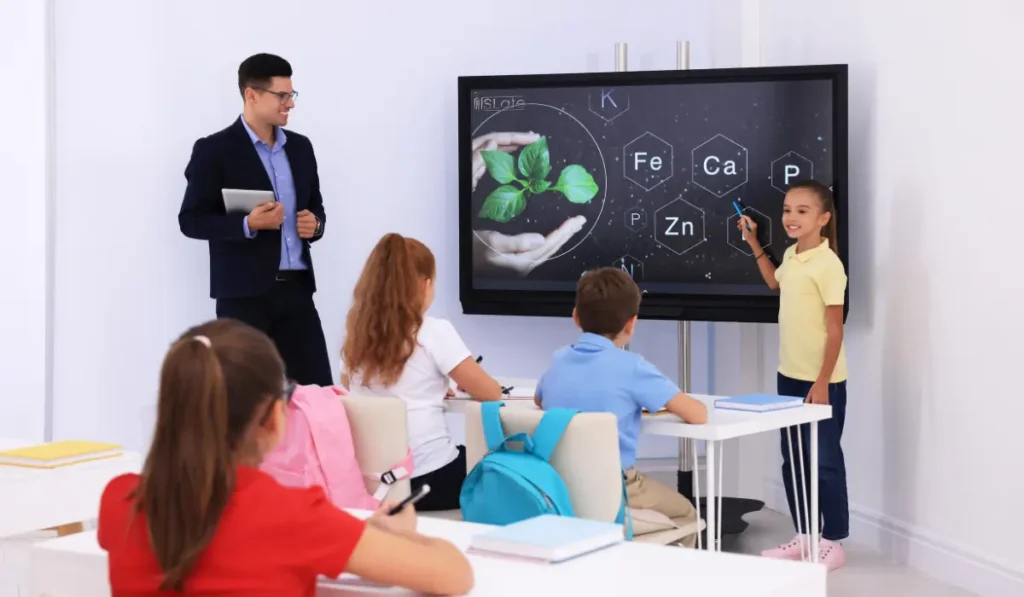
Education in 2026 looks very different from what it was even a decade ago. With the advent of digital learning tools, technology has become a central focus for teachers delivering lessons and supporting student learning. One of these innovations, Interactive Flat Panels (IFPs), also known as digital boards or smart boards, is supporting classrooms in India and beyond.
Once seen primarily as replacements for traditional blackboards, whiteboards, and projectors, interactive flat panels (IFPs) offer fully interactive touch-screen capabilities with multimedia applications and internet connections, providing a progressive classroom experience for teaching and learning.
They certainly support the vision of India’s National Education Policy (NEP) 2020, which propounds digital literacy, collaborative learning, and technology-enabled classrooms.
In this article, we will share the top 10 advantages of using an interactive flat panel for education, as well as additional benefits showing why they are becoming essential for Schools, Colleges, and Training institutions’ trainers.
Summary
This blog highlights the top 10 benefits of Interactive Flat Panels (IFPs) in education and showcases how they are shifting classrooms into more interactive, participatory, and forward-thinking spaces.
From interactivity, multimedia integration, and greater accessibility to real-time feedback and hybrid learning capabilities, IFPs cater to the diverse needs of contemporary education.
IFPs are also cost-effective and sustainable options in the long term, providing teachers with a digital solution and preparing students for a future based on technology.
With the explored benefits in more detail, the article demonstrates why IFPs are successfully replacing traditional teacher tools rapidly and are becoming pivotal leaders in India’s education revolution.
What is an Interactive Flat Panel (IFP)?
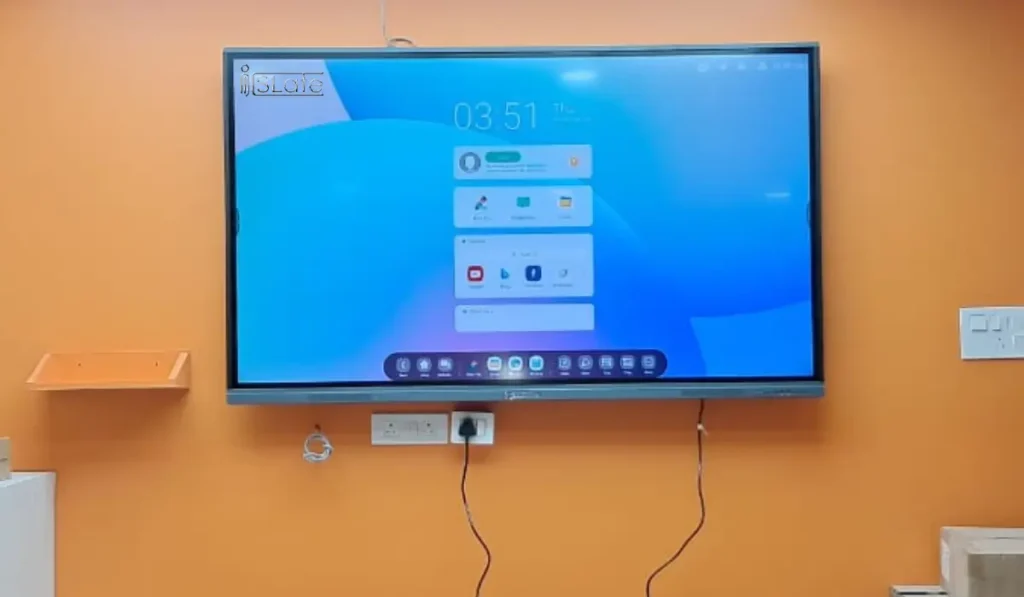
An Interactive Flat Panel (IFP) is a new technology digital display that seeks to take the place of traditional blackboards, whiteboards, and projectors in class and professional settings.
Compared to a standard TV monitor, IFPs are:
Interactive – functionality as a board, whereby multiple users can write, draw, and interact collaboratively on top of the interactive board.
Multimedia – video, images, presentations, and interactive apps.
Connected – integrated with the internet, cloud storage, and learner management system platforms.
All-in-one – enabling a more efficient in-room presentation experience without the need for fussing with projectors, speakers, and external computers (freshly manufactured IFPs tend to contain computer modules, ie, OPS).
IFPs help make lessons more interactive, engaging, and accessible in education, all while meeting student needs, including supporting hybrid and virtual learning situations.
Know About The Digital Board Brands in India.
Here are the top 10 advantages of using Interactive Flat Panels (IFPs) for education
1. Enhanced Interactivity and Engagement
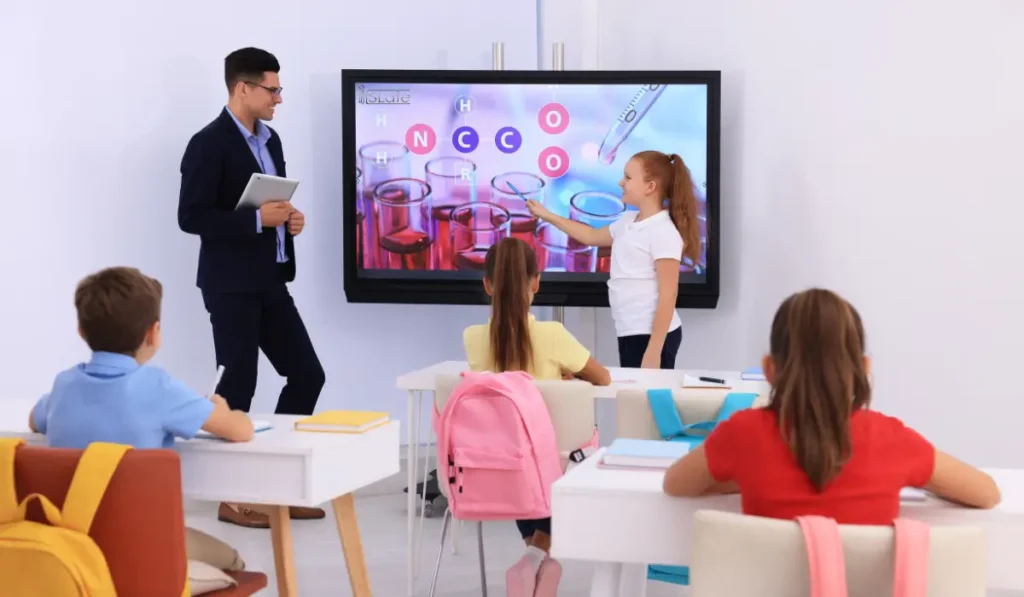
The interactive touch capability of the IFPs represents the biggest potential benefit. This turns lessons from passive with projectors or static with blackboards to active, where students and teachers can directly write, draw, highlight, and manipulate digital content on the screen.
- Teachers can mark up PDFs, draw on images, and mark on slides in real time.
- Students can engage by using the panel to solve math problems, draw diagrams, or brainstorm ideas.
- Learning with touch features captivates students for longer periods of time and reduces distractions.
Why it matters: When students are engaged in interactive lessons, it enhances student engagement and retention of learning, as it promotes authentic participation with content and regarding lessons.
2. Streamlined Multimedia Presentation

Interactive flat panels offer the ability for teachers to present a variety of multimedia formats — videos, 3D models, presentations, or instructional apps. For example, a biology teacher can render a 3D model of the human heart, manipulate it to rotate, and add annotations marking critical features; or the history teacher can present archival videos and historical maps as they discuss world history.
- Supports HD/4K Resolution and Superior Audio
- No extra projectors, speakers, or devices are necessary.
- One click of “Enter” allows access to digital content like YouTube, Khan Academy, or an in-house LMS.
Why it matters: Multimedia captures student engagement and helps them visualize and grapple with abstract understanding, for both visual learners and auditory learners.
3. Collaborative learning environment
Education today prioritizes collaboration instead of rote learning. IFPs facilitate group assignments and teamwork in the following ways:
- Multiple students can engage with the panel at the same time.
- There is cloud connectivity to share notes and files in real time.
- Split-screen mode allows groups to work on different things beside each other.
Why it matters: Collaboration builds critical thinking and problem-solving skills and prepares students for workplaces that use teams for completing work.
4. Enhanced accessibility and inclusivity
There are several accessibility features for IFPs to support inclusiveness in the classroom, as described below:
- Text-to-speech and screen readers help visually impaired students.
- Subtitles and captions assist students who experience hearing impairment.
- Adjustable screen height and touch sensitivity accommodate physical disabilities.
Why it matters: Inclusive classrooms provide equitable opportunities for students to learn equally; it is connected to important educational global initiatives, and it is consistent with India’s increasing accessibility for all equity initiatives.
5. Cost-Effective and Eco-Friendly Solution

While the interactive flat panel (IFP) system may seem expensive compared to more antiquated projectors or boards, it is more cost-effective in the long term:
- No ongoing costs for chalk, markers, or bulbs for a projector.
- Reduced maintenance requirements and a longer lifespan (usually 8 to 10 years).
- LED technology that is quite energy efficient – and uses much less power than projection.
In addition, IFPs can also provide a paperless educational environment by providing ongoing note-taking and digital assignments, which supports a lot less waste in paper.
Why it matters: Cost savings on operations over the long term and supporting environmentally sustainable educational practices.
6. Integration with Digital Learning Platforms
Contemporary Interactive Flat Panels (IFPs) are connected with:
- Learning Management Systems (LMS) such as Google Classroom and Moodle.
- Video conferencing resources such as Zoom, Microsoft Teams, and Google Meet.
- EdTech(educational technology) applications that allow for quizzes, gamified learning, and access to digital textbooks.
- Teachers can assign online assessments, assign homework directly from the IFP, and sync notes to student devices.
Why it matters: This all promotes blended learning and consistency in education, whether it be in-person or remote.
7. Real-Time Assessment and Feedback
Interactive panels typically come with integrated interactive tools, including quizzes, polls, and instantaneous assessments.
Teachers can assess how students are understanding or connecting with a task, lesson, or activity in real-time and modify their lesson or learning intentions to accommodate student needs based on the level of engagement.
- In-the-moment quizzes provide another way to make learning enjoyable and competitive.
- Instant analytics will demonstrate engagement patterns and group performance.
- Teachers will be able to provide immediate feedback that emphasizes and reinforces learning.
Why it matters: Real-time feedback supports improved learning outcomes and reduces the risk of students falling behind!
Explore How Interactive Digital Boards Are Revolutionizing Hybrid Workspaces
8. Professional Development for Teachers
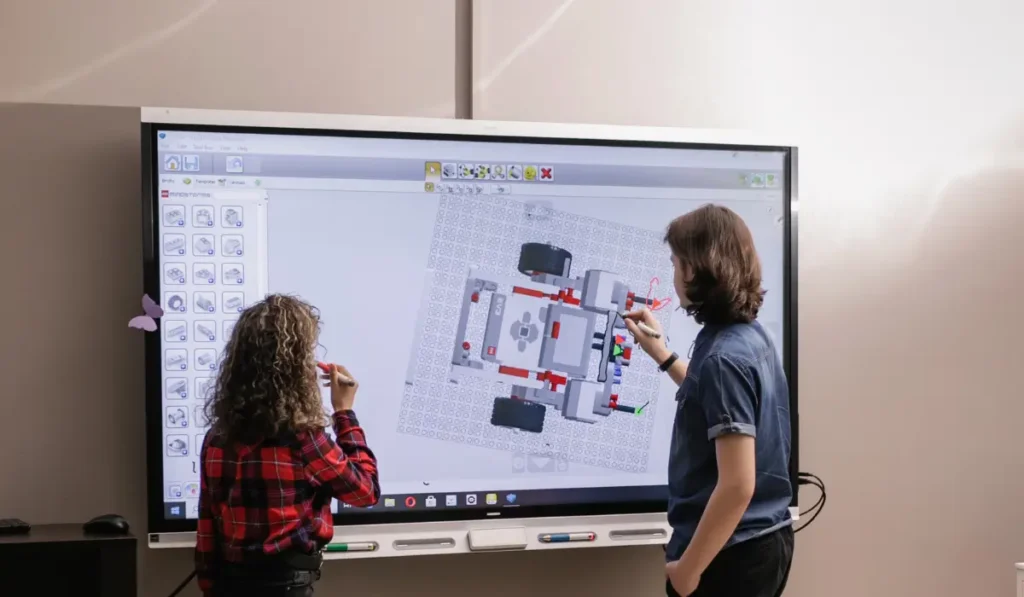
While a lot of attention is given to students, IFPs assist teachers, too.
- Built-in professional development resources and tutorials allow teachers to upskill their position in various aspects of the digital world.
- Teachers can record lessons and create a collection of lessons in a personal library.
- All lesson material is saved on the cloud so that teachers can access it anytime from anywhere.
Why it is important: Teachers develop confidence using display technology in the classroom, and this raises the quality of teaching overall.
9. Classrooms that are Future-Ready with Hybrid Learning Support
The COVID-19 pandemic accelerated the transition toward online and hybrid learning, and the IFPs are designed for this new reality:
- Embedded cameras and microphones enable easy live streaming.
- Remote students can engage with the same content as their in-class counterparts.
- Lessons can be recorded and shared later for self-paced learning.
Why it is important: Hybrid learning offers continuity during disruptions and enables students to personalize learning paths as learning becomes remote and fluid.
Also Read This: How to Choose The Best Interactive Flat Panel
10. Long-Term Influence: Preparing Students for a Digital Future
Alongside the well-known classroom advantages, IFPs are also preparing students for digital-native workplaces of the future:
- Comfort with touch-screen collaboration tools.
- Practice problem-solving and communication through digital media.
- Digital literacy development is as critical as reading or math.
Why it matters: IFPs do more than enhance the learning experience; they are preparing students for the upcoming economy.
Related Insights: Trends Driving IFP Adoption in India
Government push for Ed-Tech: Smart classrooms are being promoted across the country through initiatives such as Digital India and NEP 2020.
Growing Ed-Tech ecosystem: Schools, Ed-Tech companies, and device manufacturers are working together, making IFP visibility better in customer accessibility.
Corporate training adoption: IFPs are being utilized in offices for meetings and training services, and therefore reducing cost, as they would purchase it at a higher volume than the home market.
Conclusion
Interactive Flat Panels are more than just new technology for the classroom; they serve as transformative tools that are shifting the way that knowledge is both shared and consumed. IFPs promote interactivity and collaboration, support accessibility, and prepare students for the future, making these educational devices attractive to both teachers and students.
In India, as the education sector is transforming into more digital means of education, Interactive Flat Panels have become the focal point of the smart classroom. Schools and universities are using Interactive Flat Panels to enhance learning outcomes and ensure a future-ready education.
Ultimately, the advantages of interactive flat panels go far beyond convenience — they represent a fundamental shift toward more inclusive, dynamic, and technology-driven education. When we explore the 10 advantages of using an interactive flat panel for education, it becomes clear that these devices are not just tools for teaching but catalysts for transforming how knowledge is shared, experienced, and remembered.
At iSLate Technologies, we provide safe, reality-based Interactive Flat Panel (IFP) solutions for educational and corporate institutions throughout India, and have a regular footprint in Noida and Lucknow.
We have made it our mission to help and inspire teachers and other organizations to design smarter, engaging, and collaborative learning spaces through the integration of technology in digital classroom experiences.
FAQs
What is an Interactive Flat Panel, and how is it used in education?
An Interactive Flat Panel (IFP) is a touchscreen digital display that lets both teachers and students write, draw, and interact directly on the screen.
What are the major advantages of using Interactive Flat Panels in classrooms?
The advantages of Interactive Flat Panels in the classroom are that they provide a new stage for enhancing student engagement and collaboration in their learning, while continuing to enable greater lesson flow. IFPs offer the integration of digital tools and interactions that support learning in a positive way, while also promoting inclusivity.
3. How is an Interactive Flat Panel different from a smart board or projector?
Unlike projectors or smartboards, IFPs are touchscreen all-in-one displays that incorporate computing and audio capabilities. They offer brighter visuals, no calibration, and lower maintenance.
4. Are Interactive Flat Panels a cost savings for schools and colleges?
Yes, the purchase price is higher, but IFPs are less expensive in the long run. IFPs maintain a minimal maintenance budget, which lowers power and resource costs. This enhances the sustainability of all devices.
5. In what ways do Interactive Flat Panels support hybrid and online learning?
Interactive Flat Panels have built-in cameras and microphones, as well as built-in connectivity for video conferencing services, Zoom, and Microsoft Teams. This allows teachers to conduct live lessons, record them, and share notes digitally. In summary, Interactive Flat Panels allow for seamless hybrid and online learning experiences.




Pingback: How to Choose the Right Interactive Flat Panel (IFP) for Your Classroom and Workspace - islatetechnologies
Pingback: Top 5 Digital Board Brands in India
Pingback: How Interactive Digital Boards Are Transforming Hybrid Work
Pingback: Best Digital Board For Teaching In India | Complete Classroom Guide
Pingback: How to Choose Digital Display Solutions for Corporate Offices