In the last few years, the demand for a video podcast studio setup has grown rapidly in India. Whether you’re a content creator, coach, business owner, or influencer, having a professional video podcast studio makes your brand look polished and trustworthy. Audiences today prefer high-quality conversations with crisp audio, flattering lighting, and clean video.
If you’re planning to build a video podcast studio, this in-depth guide will walk you through everything — from studio design, equipment, lighting, acoustics, streaming workflow, and budget planning.
As a company that provides professional studio setup service in India, we have designed multiple podcast studios for creators, agencies, and brands. This guide is based on real-world setups that perform well in Indian conditions and budgets.
Why You Should Build a Video Podcast Studio (Benefits)
A dedicated studio gives you consistency, professionalism, and a strong on-screen identity. Most creators start with basic gear, but soon they realise that having a structured video podcast studio drastically changes the quality of their content. A studio saves time, ensures polished output, and helps you maintain industry-level production standards.
With more Indian audiences consuming conversational content, viewers expect clean visuals, crisp audio, and a premium background. A well-planned setup also boosts your confidence while recording. Whether you host interviews, expert talks, solo discussions, or brand videos, a dedicated studio gives you a competitive edge that phone-recorded content cannot match.
Here are 1-line summary points for each benefit
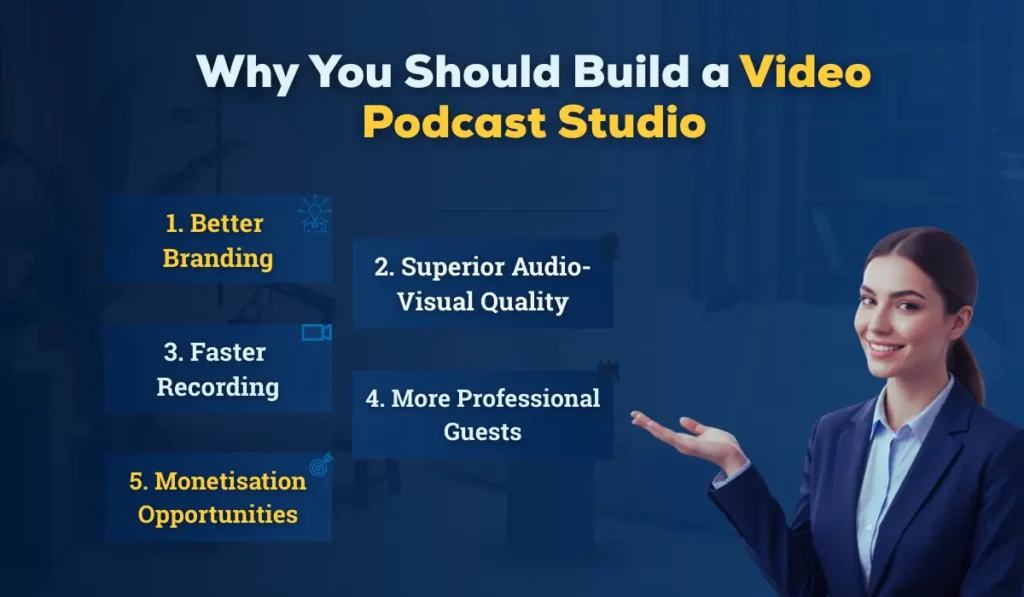
1. Better Branding
Your studio becomes a signature look for your show, just like popular Indian podcasts such as TRS, Figuring Out, or Unfiltered.
2. Superior Audio-Visual Quality
No background noise, echo, shadows, or cheap-quality video.
3. Faster Recording
A ready-to-use studio means you simply walk in and hit record.
4. More Professional Guests
Guests feel more comfortable when the environment looks premium.
5. Monetisation Opportunities
High-quality podcasts easily attract sponsors and partners.
If you search “video podcast studio near me,” you’ll see many rental options—but long-term creators understand that having your own permanent setup is far more beneficial and cost-effective.
Planning Your Video Podcast Studio Setup
A successful video podcast studio design doesn’t start with buying equipment. It begins with correct planning. Before choosing cameras, mics, or lights, think about the purpose of your studio, your brand identity, and the type of content you’re planning to produce.
Your studio needs to reflect your personality. A minimalist studio will work for educational or business content, while a bold, RGB-lit studio suits entertainment and youth-oriented content. When we design studios in India, we always focus on balancing aesthetics with functional aspects like acoustics, lighting, and camera positioning.
1. Purpose of the studio
- One-person podcast
- Two-person conversational setup
- Multi-guest panel podcast
- Solo video + B-roll educational style
- Interview + remote guest workflow
2. Room size
Ideal size: 10×12 ft or larger
Bigger rooms reduce echo and give more design flexibility.
3. Background aesthetics
Good video podcast studio design ideas include:
- Wooden acoustic panels
- Velvet curtains for a luxurious look
- LED smart lighting
- Neon nameplates or brand logo
- Bookshelves
- Textured wall wallpapers
- Custom modular sets
4. Camera angles
Plan at least:
- 1 wide shot
- 2 close-ups for two guests
- Optional overhead shot (for product shoots)
5. Colour theme
Popular themes in India:
- Black + wooden tones
- Dark grey + warm lighting
- Minimal white setup
- Studio with RGB ambient lighting
A well-planned design ensures your studio stands out visually while also making recordings smoother and more comfortable.
Essential Video Podcast Studio Setup Equipment (Complete Checklist)
When it comes to selecting the right gear, most creators get confused by the variety of options. But selecting video podcast studio setup equipment becomes easy when you know your purpose, room size, and budget. The quality of your podcast depends heavily on audio clarity, video sharpness, and lighting consistency — not on random expensive gear.
Below is a professionally curated list that works well for Indian environments, keeping in mind power stability, noise issues, humidity, and room dimensions.
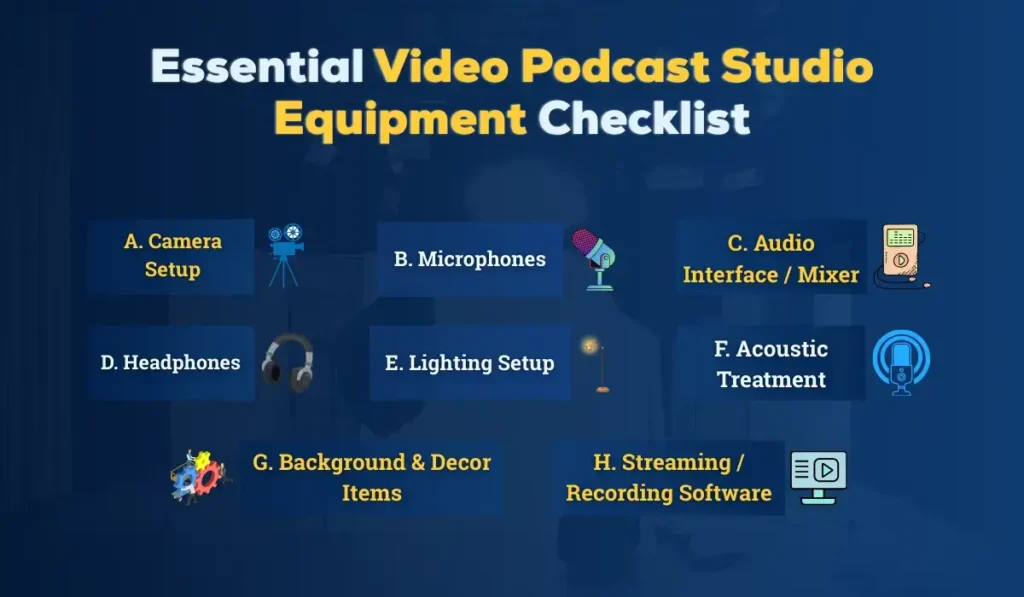
A. Camera Setup
Cameras play a huge role in making your podcast visually appealing. A mirrorless camera captures clean, crisp, and well-lit images, even in small studio spaces. Pair your camera with the right lens to achieve a cinematic, blurred-background look that audiences love.
Entry-Level
- Sony ZV-E10
- Canon EOS R50
Mid-Range
- Sony A6400
- Panasonic GH5
Premium
- Sony A7 IV
- Canon R6 Mark II
For podcasting, 35mm and 24–70mm lenses offer the most flattering look and background separation.
B. Microphones (Most Important Part)
Your microphone is the heart of your studio. No matter how good your camera is, bad audio will make viewers exit the video immediately. Indian homes and studios generally face traffic noise, echo, and disturbances from fans or AC units — which is why dynamic mics are ideal.
Dynamic Mics (Best for India’s noisy environment):
- Shure SM7B
- Shure MV7
- Rode PodMic
- Audio-Technica ATR2100x
Dynamic mics reject background noise and give a warm, radio-style voice that listeners love.
C. Audio Interface / Mixer
An audio interface ensures your microphone recordings are crystal clear and free from distortion. It also lets you adjust the gain, EQ, compression, and other audio enhancements in real time.
- Rodecaster Pro II (Best for podcasting)
- Focusrite Scarlett 2i2
- Yamaha AG06 Mk2
- Zoom PodTrak P8
An interface improves the sound quality more than any online filter or editing software.
D. Headphones
Monitoring your audio during recording is crucial. Good headphones help you catch background noises, hums, echoes, or mic handling sounds instantly.
- Audio-Technica M50x
- Sony MDR-7506
- AKG K240
Closed-back headphones prevent your mic from picking up headphone sound.
E. Lighting Setup for Podcast Studio
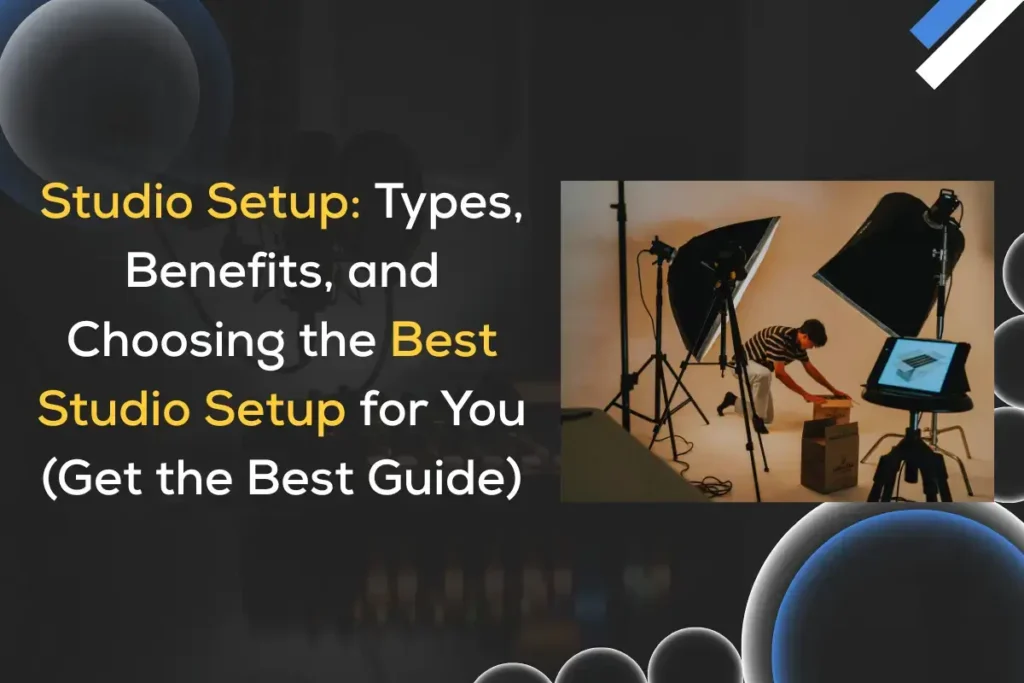
Lighting is the most underrated part of any video podcast studio setup. Even a mid-level camera can look cinematic with good lighting. The goal is to soften shadows, highlight the subject, and create depth using backlights.
Point Lighting:
- Key Light – Main light on the host
- Fill Light – Softens shadows
- Back Light / Hair Light – Creates separation from the background
Recommended lights:
- Godox SL60W
- Godox SZ150R
- Nanlite Forza series
- Elgato Key Light
Using softboxes and diffusers makes the lighting smooth and flattering.
F. Acoustic Treatment (Very Important in Indian Rooms)
Most Indian rooms have tiles, plain walls, and hard surfaces, all of which cause echo. Acoustic treatment absorbs unwanted reflections and makes your voice sound rich and professional.
Use:
- Acoustic foam panels
- Bass traps in corners
- Heavy curtains
- Carpet or rug
- Bookshelf to diffuse sound
Acoustic treatment will improve your sound more than any premium microphone ever can.
G. Background & Decor Items
- LED RGB tube lights
- Branded neon sign
- Wooden acoustic wall
- Indoor plants
- Studio table + chairs
- Shelves + props
These elements make your studio visually striking and help build your brand identity.
H. Streaming / Recording Software
- OBS Studio (free & powerful)
- Streamlabs
- vMix (professional)
- Riverside.fm
- Zoom + external recorder
Your software will decide how smooth your streaming workflow feels.
How to Set Up a Video Podcast Studio (Step-by-Step)
Setting up a studio can feel overwhelming, but if you take it step by step, the process becomes simple. Below is the exact workflow we use when setting up professional studios for clients.
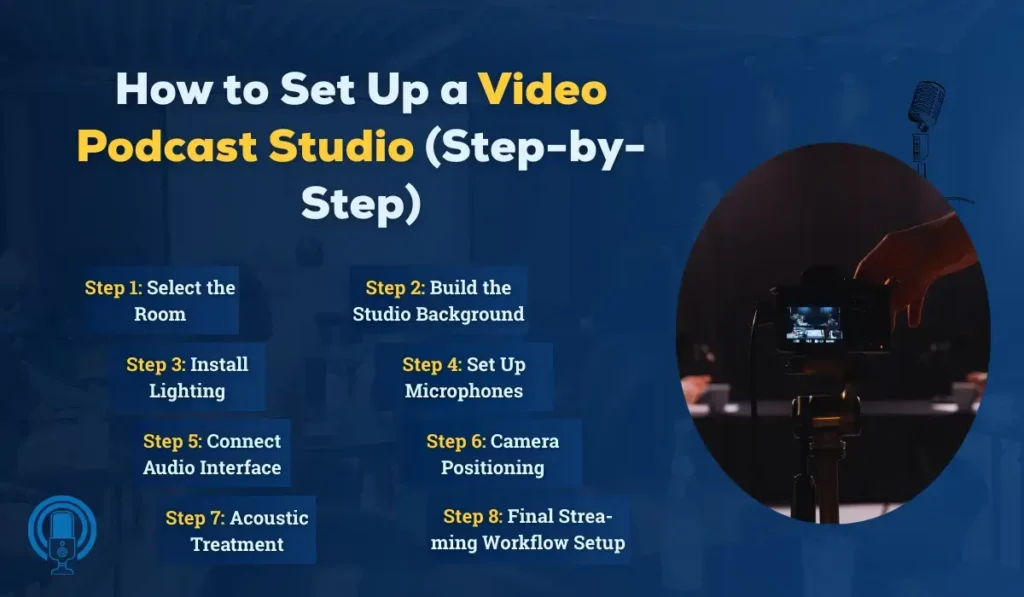
Step 1: Select the Room
Pick a room that’s quiet and away from traffic noise. Avoid rooms with excessive reverb or large empty walls. Rooms with curtains, furniture, and carpets naturally sound better.
Step 2: Build the Studio Background
Your background should be both aesthetic and brand-friendly. Install wall textures, frames, panels, or RGB lights based on your theme. Your background should never distract from the conversation — it should enhance it.
Step 3: Install Lighting
Position your lights carefully to avoid harsh shadows. Mount them slightly above eye level for a clean, natural look. Add RGB lights behind the subject to create depth.
Step 4: Set Up Microphones
Dynamic mics should be placed close to the speaker’s mouth (6–8 inches). Make sure the mic stand is sturdy and not touching the table to avoid vibration noise.
Step 5: Connect Audio Interface
Your audio interface controls the sound output. Adjust levels so the audio does not peak. Add compression and EQ for warmth. Use noise gate settings to reduce unwanted background sounds.
Step 6: Camera Positioning
Use multiple cameras for dynamic shots. Keep your wide camera centered and close-ups at 45-degree angles. Remember to frame your shot with headroom and a clean background.
Step 7: Acoustic Treatment
Place panels behind the speakers and on the side walls. Add bass traps to the corners if your room has deep echoes. Avoid covering the entire wall — balance is key.
Step 8: Final Streaming Workflow Setup
Test your entire workflow before recording. Set up OBS scenes, configure audio sync, and check your bitrate. Always do a short test recording to ensure everything is working perfectly.
Best Video Podcast Studio Setup Ideas (Indian Creator Use Cases)
Indian creators have diverse branding styles. From motivational podcasts to business interviews to entertainment shows, every studio should reflect its content category. Here are the most popular design trends today:
1. Dark Studio with Wooden Background
- Black walls
- Warm tungsten lighting
- Bookshelf design
- Shure SM7B setup
2. RGB Modern Studio
- LED strip backlighting
- Linear tube LEDs
- Neon nameplate
- High contrast shots
3. Minimal White Studio
- Clean white wall
- Plants + framed art
- Natural daylight looks
4. Professional Talk-Show Setup
- Sofa + center table
- Multiple camera angles
- Side lamps
5. Home Office Podcast Setup
- Desk background
- Simple condenser mic setup
- Softbox + practical lamps
Live Streaming Workflow for Video Podcasts
Live streaming adds complexity, but it also allows real-time engagement with your audience. A reliable streaming setup requires stable internet, proper encoding settings, and clean transitions between scenes.
A. Hardware Setup
- Cameras → Capture cards
- Mics → Mixer
- Mixer → PC
- Stable internet (minimum 20 Mbps upload)
B. Software Setup (OBS Example)
- Add camera sources
- Add a microphone source
- Create scenes
- Apply LUTs for colour grading
- Add overlays / lower-thirds
- Set bitrate 6000–8000 kbps
- Connect to YouTube RTMP
C. Backup Recording
Always keep:
- Audio recording in the mixer
- Video recording in cameras
- OBS recording
Explore our YouTube Studio Setup Guide for YouTube videos and podcasts.
Budget for Building a Video Podcast Studio in India
Indian studios vary widely in pricing because of room size and equipment preferences. Here’s a realistic breakdown:
Basic Studio (₹50,000 – ₹1,00,000)
- Basic camera
- USB mic
- Ring light
- Simple background
Intermediate Studio (₹1,00,000 – ₹3,00,000)
- Mirrorless camera
- Dynamic mic setup
- Softbox lights
- Acoustic panels
Professional Studio (₹3,00,000 – ₹10,00,000+)
- Multiple cameras
- Shure SM7B microphones
- Rodecaster Pro II
- Professional lighting
- High-end furniture + design
Common Mistakes to Avoid During Video Podcast Studio Setup
1. Using cheap condenser mics
Dynamic mics are better for Indian rooms.
2. Ignoring room acoustics
Even a ₹20,000 mic sounds bad in an echoey room.
3. Poor lighting
Good lighting matters more than an expensive camera.
4. Messy background
A clean, aesthetic background improves engagement.
5. No backup recording
Data loss can ruin full episodes.
Why Choose Professional Studio Setup Services?
Setting up a studio the right way requires technical knowledge and design expertise. Most creators buy equipment but don’t get the desired output because the setup is not optimised. Professional teams ensure proper acoustic planning, accurate lighting angles, correct mic placement, and a clean overall layout — all of which make a huge difference.
We also help clients choose the right gear depending on their content style, budget, and future expansion plans. Our setups are designed using practical experience of Indian conditions like power fluctuations, noise, and room limitations.
Final Thoughts
A well-built video podcast studio setup can transform your content quality and brand image. In today’s competitive digital world, viewers judge your professionalism within the first few seconds of watching your video. A polished background, smooth lighting, and noise-free audio signal show that you take your content seriously. With the right equipment, good planning, and proper workflow, anyone can build a premium studio — whether it’s a dedicated room, a rented space, or even a home office. If you invest wisely today, your studio will serve you for years and help you create consistent, high-quality content that stands out in the crowded podcasting space.

Pingback: The Ultimate Podcast Studio Setup Guide for 2025
Pingback: Complete YouTube Studio Setup Guide (Camera, Lights, Sound)
Pingback: Best Studio Setup Guide (2025 & 2026): Types, Benefits, & Choosing The Best
Pingback: Video Recording Studio Setup Cost in India